India–China Clash Again over Arunachal after Woman’s Detention in Shanghai Airport

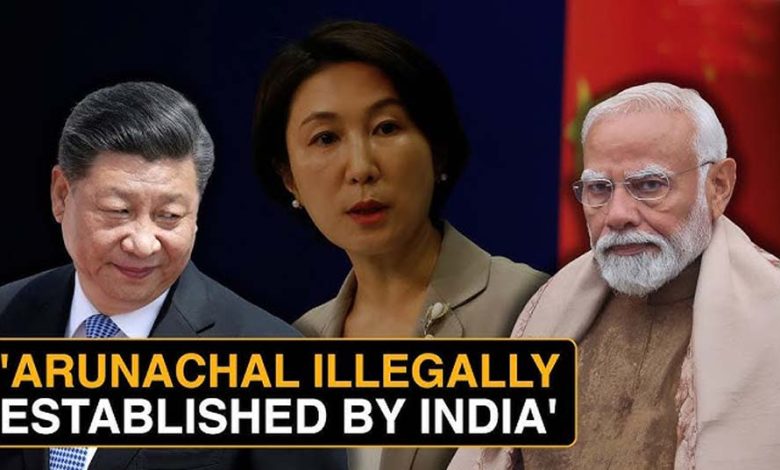
India and China are once again locked in a diplomatic spat after months of relative calm, following allegations that Chinese authorities harassed a woman from India’s northeastern state of Arunachal Pradesh during transit at Shanghai Pudong International Airport.
China claims Arunachal Pradesh as part of “southern Tibet” or Zangnan.
Here’s what happened, why Arunachal remains a flashpoint, and what this latest dispute means for Asia’s two biggest nations.
What happened?
Prema Wangjom Thongdok, an Arunachal-born Indian citizen based in the United Kingdom, was travelling from the UK to Japan with a layover in Shanghai on Friday.
What should have been a three-hour transit turned into an 18-hour ordeal.
Thongdok says airport officials detained and harassed her because her Indian passport listed Arunachal Pradesh as her place of birth. She alleges Chinese officials claimed her passport was “invalid” since—according to Beijing—Arunachal Pradesh belongs to China.
She told India Today via videolink from Bangkok that after clearing the e-gate immigration checkpoint, an officer singled her out, shouting “India! India!” and insisting her passport was not valid.
Thongdok says the official told her: “Arunachal is part of China.”
She replied: “Arunachal is part of India. I’ve never heard of it being part of China.”
She says she was held without being told how long she would be kept and was pressured to buy a new ticket on China Eastern Airlines, implying her passport would only be returned once she did. The delay caused her to lose money on missed flights and hotel bookings.
With help from a friend in the UK, she contacted the Indian consulate in Shanghai. Indian officials later escorted her onto a late-night flight out of the city.
Indian media noted that she travelled through Shanghai Pudong Airport in October without any issues. It remains unclear why this trip was different.
Have such incidents happened before?
Yes. China has a long-standing practice of treating residents of Arunachal Pradesh differently from other Indian passport holders.
Since 2005, Beijing has issued stapled visas—not stamped ones—to people from Arunachal Pradesh, claiming it cannot issue normal visas to individuals it considers Chinese citizens.
India refuses stapled visas, arguing this would imply Arunachal residents are not Indian nationals.
There have been several flashpoints:
2013 – Two Arunachal archers received stapled visas for the Youth World Archery Championship; India barred them from travelling.
July 2023 – Three martial arts athletes from the state were issued stapled visas for the World University Games in Chengdu; India withdrew its entire wushu team.
September 2023 – The same athletes could not attend the Hangzhou Asian Games because they were unable to download accreditation cards (which function as visas).
India’s Sports Minister Anurag Thakur cancelled his trip to protest.
What is the Arunachal Pradesh dispute?
The dispute dates back to the British colonial era.
In 1914, the McMahon Line was drawn during the Simla Convention between Britain, Tibet and China. Although Chinese representatives attended, they refused to sign the final agreement and rejected the boundary.
Henry McMahon, the British negotiator, finalised the boundary with Tibet anyway. Beijing insists Tibet had no authority to draw borders independently—especially after China annexed Tibet in 1951. China also cites older maps, including British ones, showing land south of the McMahon Line as Chinese territory.
India, since 1947, has treated the McMahon Line as the legal border.
While China historically claimed only the Tawang region, its claims have gradually expanded to the entire state of Arunachal Pradesh.
Experts say tensions have intensified under Chinese President Xi Jinping, whose territorial posture has become increasingly assertive.
As Xi said in 2018: “We cannot lose one inch of territory passed down by our ancestors.”
India, under Prime Minister Narendra Modi since 2014, has also toughened its stance on border issues.
How has the dispute played out historically?
Arunachal Pradesh has been central to Sino-Indian tensions for decades:
- 1962 – The region witnessed major battles during the India–China war; Chinese troops captured Tawang but later withdrew.
- 1975 – A deadly clash at Tulung La left four Indian soldiers dead.
- 2012 – China protested the Dalai Lama’s planned visit to Arunachal; he did not travel.
- December 2022 – Minor scuffles erupted in Tawang, both sides blaming the other.
January 2024 – China approved construction of a dam in Tibet’s Medog County. India responded by approving the Siang Upper Multipurpose Project in Arunachal—raising concerns about submerging Indigenous villages in India and Bangladesh.
Why is Arunachal Pradesh significant?
The state holds major strategic, geographic and cultural value for both countries.
For India:
- It serves as a military district and a gateway to Southeast Asia.
- It borders Myanmar and lies close to Bhutan.
It is pivotal to the India–Myanmar–Thailand Trilateral Highway.
For China:
- It is tied to Tibetan identity.
- The sixth Dalai Lama, Tsangyang Gyatso, was born near Tawang.
Beijing insists Arunachal is an extension of Tibet.
India’s decision in 2024 to name an unnamed mountain peak after the sixth Dalai Lama angered China, which reiterated that the region is “illegally set up” by India.
How did India and China respond this week?
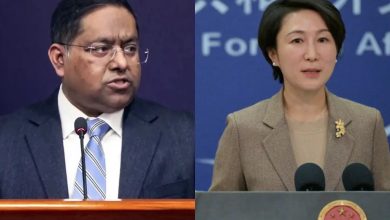
China’s Foreign Ministry spokesperson Mao Ning doubled down on Beijing’s stance:
“Zangnan is China’s territory. The Chinese side has never recognised the so-called Arunachal Pradesh.”
She insisted authorities acted “in accordance with laws and regulations” and denied Thongdok was detained or harassed, saying her rights were protected and that she was provided food and rest facilities.
India rejected these claims.
Foreign Ministry spokesperson Randhir Jaiswal said:
“Arunachal Pradesh is an integral and inalienable part of India … an indisputable reality.”
He said the detention violated international air travel conventions and even China’s own rules allowing visa-free transit for up to 24 hours.
What does this mean for India–China relations?
Experts describe the latest dispute as a temporary hiccup, not a major rupture.
India and China have worked to stabilise ties after the 2020 Galwan Valley clash in Ladakh—the deadliest in four decades—which led India to ban more than 200 Chinese apps.
Since late 2024, relations have cautiously improved:
Modi and Xi met in Kazan during troop disengagement.
Chinese Foreign Minister Wang Yi visited India in August.
Modi visited China later that month for the first time in over seven years.
Still, analyst Raj Verma says the fundamental rivalry remains intact:
“Both countries view each other as competitors. The competition will continue.”