Bangladesh Condemns India for Allowing Fugitive Ex-PM Hasina’s Public Address

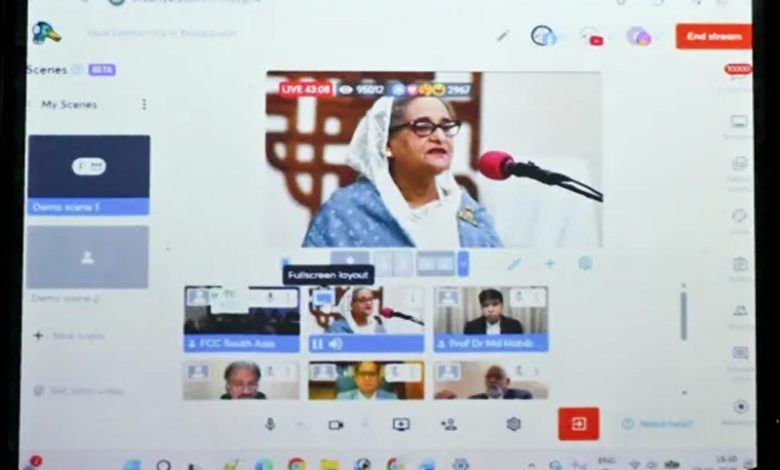
Bangladesh has sharply criticized India for permitting ousted former prime minister Sheikh Hasina to deliver her first public address since fleeing the country after the 2024 uprising.
In a statement on Sunday, Bangladesh’s Ministry of Foreign Affairs said it was “surprised and shocked” that Hasina was allowed to speak publicly in New Delhi, calling the move a “clear affront to the people and the Government of Bangladesh.”
The ministry accused Hasina of using the platform to spread “hate speech” and alleged that her appearance amounted to shielding a leader it described as responsible for mass killings during last year’s unrest.
Hasina, 78, has been living in exile in India since August 2024, after a student-led movement ended her 15-year rule, which was marked by accusations of widespread human rights abuses, including attacks on opposition figures, arbitrary detentions and targeted killings.
In November, a Dhaka court sentenced her to death in absentia on charges of incitement, ordering killings and failing to prevent atrocities during the crackdown on the uprising, in which more than 1,400 people were killed.
Her comments were broadcast in an audio address on Friday to a packed Foreign Correspondents’ Club in New Delhi and streamed online to more than 100,000 viewers. During the speech, Hasina accused interim government leader Muhammad Yunus of being a “murderous fascist” and claimed Bangladesh would “never experience free and fair elections” under his leadership.
Bangladesh is set to hold its first general election since Hasina’s removal on February 12. Her Awami League party has been barred from participating after the Election Commission suspended its registration in May.
The Foreign Ministry said Hasina had “openly called for the removal” of the interim government and incited supporters to carry out acts of violence aimed at derailing the upcoming vote. It warned that allowing such an address created a “dangerous precedent” that could seriously damage bilateral relations with India, which has so far ignored Dhaka’s request to extradite the former leader.
As the country of 170 million heads toward the polls, the main contenders are the Bangladesh Nationalist Party and a coalition led by Jamaat-e-Islami, the country’s largest Islamist party.