India Curbs 10-Minute Grocery Deliveries, but Riders Still Risk Their Lives to Race the Clock

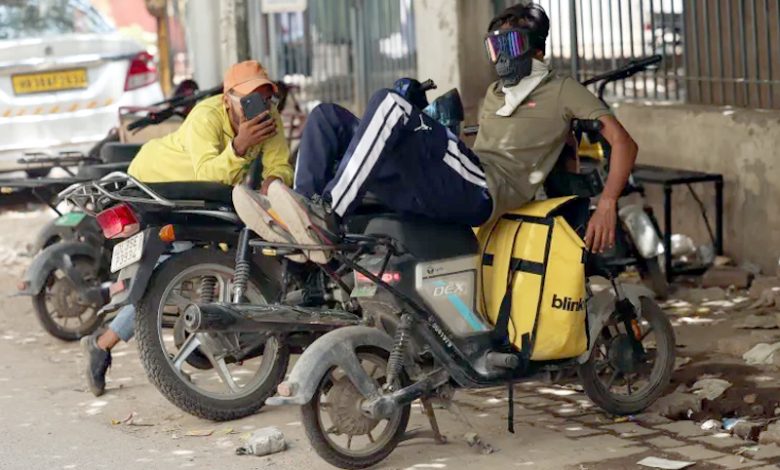
India has asked quick commerce companies to stop promising grocery deliveries within 10 minutes following mounting concerns over worker safety, but delivery riders and labour advocates say the pressure to rush through congested streets remains unchanged.
The government’s move came earlier this month after gig workers staged a nationwide strike over dangerous working conditions in India’s rapidly expanding instant delivery sector. Officials from the labour ministry warned companies that ultra-fast delivery timelines were encouraging reckless riding and endangering workers’ lives.
Yet riders say competition among platforms continues to push them to deliver as fast as possible — whether or not companies formally advertise 10-minute services.
Just months ago in Noida, near New Delhi, 21-year-old delivery rider Himanshu Pal watched helplessly as his colleague Ankush, an 18-year-old on his first day at work, was fatally struck by a car while rushing to complete a grocery order.
“He was constantly looking at the phone, the traffic, the customer calling — trying to reach within 10 minutes,” Pal recalled. “That was all it took. A car hit him and left him dead at the signal.”
Ankush had travelled more than 1,000 kilometres from his village in Bihar, rented an electric bike, and signed up with Swiggy, one of India’s leading quick commerce platforms. Fellow riders later crowdfunded money to send his body home.
India’s instant delivery industry — dominated by Swiggy, Zomato’s Blinkit, Zepto, Flipkart Minutes and most recently Amazon’s 15-minute service Tez — has transformed urban shopping, promising groceries, medicines and essentials in minutes to the country’s expanding middle class.
But workers and unions say the business model relies on unsafe speed.
Riders face heavy traffic, damaged roads, extreme heat and toxic air, while pay is tied to the number of deliveries completed and customer ratings. Accidents, they say, are rarely counted as workplace fatalities.
Despite the government directive, delivery apps in parts of the Delhi region were still displaying estimated delivery times under 10 minutes days later.
Analysts say removing the slogan is largely cosmetic.
“The promise may be gone, but speed remains the foundation of quick commerce,” said Karan Taurani of Elara Capital. “The business model hasn’t changed.”
The sector has grown explosively since the COVID-19 pandemic, fuelled by neighbourhood “dark stores” — small warehouses stocked solely for online orders. Quick commerce recorded $7 billion in gross orders last year, more than double the previous year, and has become one of India’s fastest-growing investment segments.
At the same time, India’s gig economy is expected to triple from 7.7 million workers in 2021 to 23.5 million by 2030, according to government estimates.
Experts argue the boom is sustained by deep inequality — with companies able to keep large pools of low-paid riders waiting for orders near wealthy neighbourhoods, often without social security or minimum wages.
“The Indian middle class is riding on the backs of the poor,” said author Vandana Vasudevan, who studies gig worker lives. “Convenience is coming at the cost of workers’ safety and dignity.”
Workers say earnings depend on speed.
“The more orders we deliver, the more we earn — which means riding faster, jumping signals, even driving on the wrong side,” said rider Pankaj Kumar in Noida.
Kumar fractured his shoulder in an accident last year but returned to work within days to avoid losing incentives. He says no medical support was provided by the platform.
India is drafting new labour laws that would formally recognise gig workers and provide accident insurance and social security, partly funded by companies. But riders say protections remain largely theoretical.
Frustration has pushed workers toward collective action. On New Year’s Eve, thousands logged off platforms in coordinated strikes demanding transparent pay algorithms, protection from sudden account deactivations, and the right to organise.
Union leader Shaik Salauddin said riders faced intimidation and automated firings after protests, but insisted the government’s delivery-time intervention showed their voices were finally being heard.
“This was a protest for the right to life and dignity,” he said. “If companies continue cheating workers, we will not stay silent.”
For riders like Pal, the reality remains stark.
“We deliver groceries with our lives on the line every day,” he said. “What could anyone possibly need within 10 minutes that’s worth someone dying for?”