By Hamid Ullah
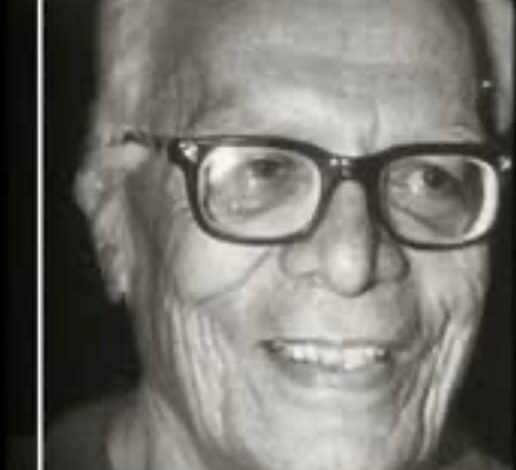
Every October, I am reminded of a man whose quiet brilliance transformed the meaning of development in Pakistan, Dr Akhtar Hameed Khan. Dr Akhtar Hameed Khan’s last great endeavour, the Orangi Pilot Project (OPP), remains an enduring symbol of human dignity achieved through self-reliance. After his death, his disciples, devoted to carrying forward his philosophy, established three institutions in his honour: the Akhtar Hameed Khan Memorial Trust, the Akhtar Hameed Khan Resource Centre, and the Akhtar Hameed Khan National Centre for Rural Development. The last of these was later expanded by former minister Omar Asghar Khan. These are not mere brick-and-mortar memorials; they are living embodiments of his vision.
Dr Khan’s journey began much earlier when his Comilla (Mela) Project in Bengal first earned him renown during the Ayub era. His approach inspired many of his disciples, among whom Aziz Shoaib Sultan experimented with initiatives like AKRSP and NRSP that transformed into government initiatives such as Benazir Bhutto’s Lady Health Worker Programme and the Khushhali Bank.
I remember vividly my first meeting with him. In the early 1980s, UNDP’s Fayaz Baqir encouraged us to study Dr Khan’s work in Karachi and even funded our journey. When I along with Sumaira Gul met him, Dr Khan’s words struck me with the force of revelation: “If sanitation can be built in six thousand streets of Orangi through self-help, why can it not be done anywhere else in Pakistan?”
On returning home, we began our own sanitation project based on his “component-sharing” philosophy, where people worked within their lanes while the government supported the larger framework. When Dr Khan later visited our area in Rawalpindi, he smiled in approval, and that remains one of my proudest memories.
I also recall the day when Punjab Chief Minister Shahbaz Sharif at a time when his brother Nawaz Sharif, was Prime Minister along with his cabinet, came to meet him. I along with Sumaira Gul was also present there. Shahbaz offered to fund the Orangi project across Punjab. Dr Khan, in his gentle but piercing tone after taking a sip of tea, replied, “Shahbaz, I am a teacher, not a contractor. We cleaned our streets ourselves. If you understand the idea, go and do it yourself.”
The room fell silent, but the lesson endured by all. Jahangir Tareen later took inspiration from that meeting and, with the help of Hafeez Arain, initiated a pilot project in Lodhran that helped clean hundreds of villages.
For two decades, Dr Khan roamed the lanes of Orangi not as a benefactor but as a guide. He used to say that the people of Orangi were “not poor in pocket, but poor in thought.” He worked tirelessly to banish this mental poverty, which he believed was the worst form of deprivation.
The Orangi Pilot Project is not merely confined to a four-kanal building; it represents a far-reaching vision of community empowerment. That vision continues to thrive across South Asia, carried forward by his close associates, Arif Hasan and Tasneem Siddiqui. A son-in-law of Allama Inayatullah Khan Mashriqi, he resigned from the service of the British Raj, and started making locks in Aligarh, and after East Pakistan debacle, left for US and returned from Michigan in 1980s not in search of fame but to serve. When Agha Hasan Abidi once asked him to work again in Pakistan, he replied, “I have returned to die.” Agha Hasan Abidi advised him to dedicate half of his remaining time to serving the country and the other half to preparing for death.
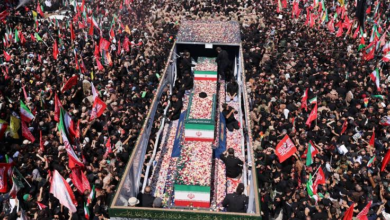
He left this world on 12 October 1999 and was laid to rest in his modest Orangi office. Yet his ideas still walk the streets. Wherever people learn to help themselves, Dr Akhtar Hameed Khan lives on.