Explainer: What Is Jamaat-e-Islami — and Can It Really Lead Bangladesh?

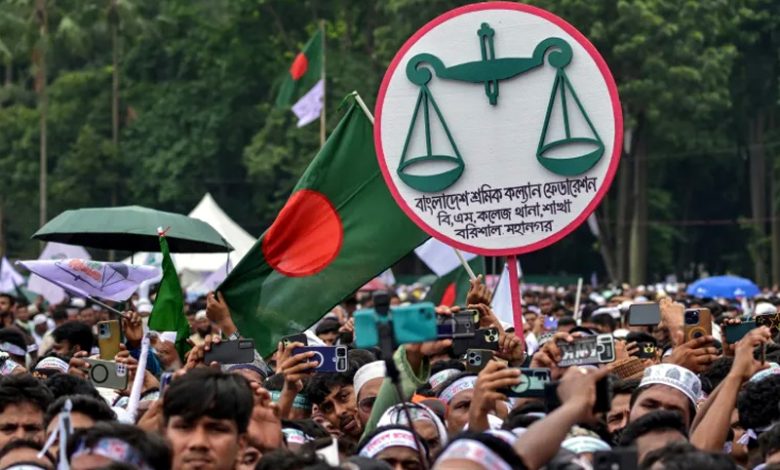
Dhaka, Bangladesh — For the first time in its turbulent history, Bangladesh’s Islamist Jamaat-e-Islami party appears within striking distance of political power, raising questions about whether it could emerge as the leader of the country’s next government.
The prospect has energized supporters like Abdur Razzak, a 45-year-old banker in Faridpur, who says enthusiasm for Jamaat’s “scales” symbol is surging as Bangladesh heads toward a general election on February 12. The vote will be the country’s first since a student-led uprising ousted longtime prime minister Sheikh Hasina in August 2024.
Following Hasina’s fall, an interim government led by Nobel Peace Prize laureate Muhammad Yunus banned the Awami League, reshaping the political landscape into a contest between the Bangladesh Nationalist Party (BNP) and a Jamaat-led alliance that includes the National Citizen Party (NCP) and other Islamist groups.
Recent opinion polls suggest a close race. A December survey by the US-based International Republican Institute put BNP support at 33 percent, with Jamaat close behind at 29 percent. Another poll conducted by Bangladeshi research groups last week showed BNP at 34.7 percent and Jamaat at 33.6 percent.
If victorious, it would mark a dramatic comeback for a party that endured severe repression during Hasina’s 15-year rule, when Jamaat was banned, senior leaders were executed or jailed, and thousands of members were allegedly disappeared or killed. Those crackdowns followed controversial convictions by the International Crimes Tribunal over Jamaat’s role in atrocities during Bangladesh’s 1971 independence war — a period when the party sided with Pakistan.
Ironically, the same tribunal later sentenced Hasina to death in absentia for ordering a violent crackdown on 2024 protesters that killed more than 1,400 people. Hasina fled to India, which has so far declined to extradite her despite requests from Dhaka.
From repression to resurgence
Founded in 1941 by Islamist thinker Syed Abul Ala Maududi, Jamaat opposed Bangladesh’s independence and later faced a ban in 1972, lifted in 1979 under then-president Ziaur Rahman. The party gained influence in the 1990s and joined BNP-led governments, holding cabinet posts in the early 2000s before falling out of favour again under Hasina.
Since the 2024 uprising and the lifting of restrictions, Jamaat has reorganised under its current leadership and capitalised on public frustration with the country’s two dominant parties — the Awami League and the BNP. Its student wing, Islami Chhatra Shibir, has also scored recent campus election victories.
Party leaders claim Jamaat has around 20 million supporters nationwide and 250,000 registered members, giving it a formidable organisational base that newer allies like the NCP hope to tap.
Fears, promises and foreign ties
Jamaat’s rise has triggered debate over whether Bangladesh is ready to be governed by an Islamist party. Critics fear restrictions on women’s rights or moves toward Sharia law, while Jamaat leaders insist they would govern under the secular constitution, prioritising reform, anti-corruption measures and good governance.
Seeking to broaden its appeal, Jamaat has fielded its first Hindu candidate and emphasised minority rights. Analysts say its best chance lies in projecting itself as a disciplined and relatively “clean” alternative rather than foregrounding Islamist ideology.
Still, scepticism remains. Experts note that Jamaat has never won more than 12 percent of the popular vote or even 20 parliamentary seats in past elections, and its historical baggage continues to deter many voters.
The election could also test Bangladesh’s foreign relations. Analysts warn that a Jamaat-led government may struggle to reset ties with India, while relations with Pakistan — already warming since Hasina’s ouster — could deepen further.
As the campaign intensifies, supporters argue the February 12 vote is about more than ideology. It is a referendum on whether a party long defined by exclusion and controversy can convert organisational strength and public discontent into national legitimacy — and possibly, power.