In a landmark move signaling its growing reliance on Chinese military hardware, Pakistan officially inducted the Z-10ME attack helicopter into its Army Aviation Corps on August 2, 2025. The induction ceremony, held at Multan Garrison and attended by Chief of Army Staff General Asim Munir, included a live-fire demonstration at the Muzaffargarh Field Firing Ranges, underscoring the aircraft’s combat capabilities.
This strategic acquisition replaces Pakistan’s aging AH-1F/S Cobra fleet and comes at a critical time—just weeks after India received its first batch of AH-64E Apache Guardians from the United States. The induction is seen as a direct counterbalance to India’s expanding helicopter force, particularly in the contested Kashmir region.
A Shift Toward Chinese Technology
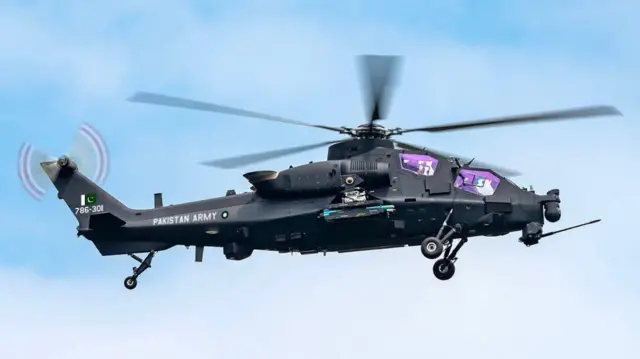 The Z-10ME, developed by China’s Changhe Aircraft Industries Corporation (CAIC), represents a significant technological and political shift. Pakistan’s earlier attempts to procure U.S. AH-1Z Vipers and Turkey’s T129 ATAK helicopters were blocked by Western export restrictions. This prompted Islamabad to turn to Beijing, deepening a longstanding defense partnership. According to SIPRI, 81% of Pakistan’s arms imports from 2020 to 2024 originated from China.
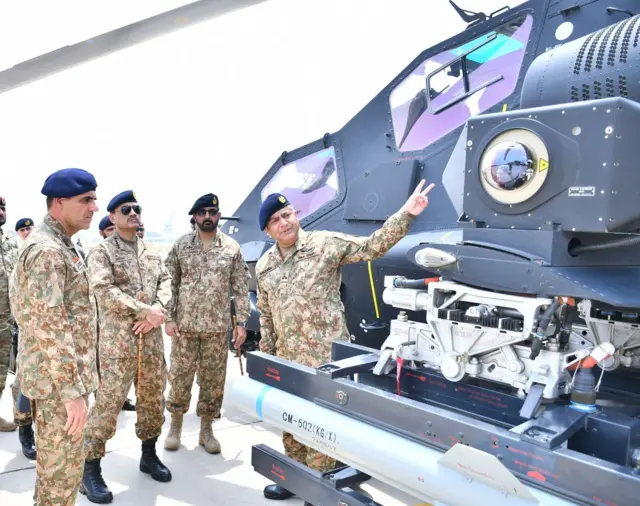 Pakistan’s decision is not merely logistical—it is strategic. As Western arms deals became increasingly politicized, China emerged as a reliable supplier, responsive to Pakistan’s operational and geopolitical needs.
Advanced Capabilities for High-Altitude Warfare
The Z-10ME is engineered for high-altitude and all-weather combat, making it particularly suitable for deployment along the Line of Control (LoC), including the Siachen Glacier and Karakoram ranges.
Key features include:
- Helmet-Mounted Sights: The pilot can aim the 23mm cannon using head movements—akin to a “mobile gun system.”
- YH-60 Millimeter-Wave Radar: Enables target acquisition even in fog and harsh weather, comparable to the Apache’s Longbow radar.
- AI-Integrated Electronic Warfare Suite: Includes radar and missile warning systems with automatic threat response.
- Armored Enhancements: Pilot seats and cockpit armor enhance survivability.
- High-Altitude Engines: The WZ-9C turboshaft engines are optimized for operations above 6,000 meters.
- Reduced Infrared Signature: Angled exhaust design lowers vulnerability to heat-seeking missiles.
Weaponry and Tactical Versatility
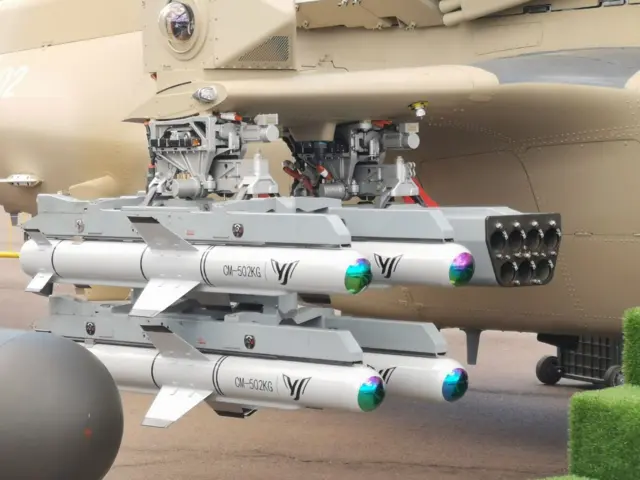
The Z-10ME supports a broad arsenal: up to 16 HJ-10 anti-tank guided missiles, 70mm rockets, TY-90 air-to-air missiles, and precision-guided munitions. These features offer tactical flexibility for counter-insurgency and border defense operations.
According to Air Commodore (Retd.) Muzamil Jibran, the Z-10ME’s combination of modern radar and AI-driven defense systems marks a leap in Pakistan’s helicopter capabilities.
Comparison with India’s Apache AH-64E
India’s Apache fleet, a combat-tested platform from Boeing, presents a formidable benchmark. While the Apache has longer range, higher speed, and proven combat experience, the Z-10ME holds its ground in several critical areas:
| Feature | Z-10ME (Pakistan) | AH-64E Apache (India) |
| Manufacturer | CAIC (China) | Boeing (USA) |
| Max Speed | ~300 km/h | ~365 km/h |
| Operational Range | 800–1,120 km | ~1,900 km (with external tanks) |
| Radar | YH-60 MMW | AN/APG-78 Longbow |
| Armament | HJ-10 ATGMs, TY-90 AAMs | Hellfire ATGMs, Stinger AAMs |
| Combat Experience | Untested in war | Proven in Iraq, Afghanistan |
| Estimated Unit Cost | $20–25 million | $35–50 million |
Experts note that while the Apache remains superior in performance and combat pedigree, the Z-10ME’s lighter weight, tailored design, and affordability make it highly effective in Pakistan’s operational environment.
Strategic and Geopolitical Implications
Beyond hardware, the Z-10ME induction represents a strategic pivot:
- Modernization Drive: Replaces obsolete Cobras with state-of-the-art systems, enhancing close air support and anti-armor capabilities.
- China-Pakistan Defense Nexus: Solidifies Beijing’s role as Pakistan’s top defense partner, with prospects for future platform acquisitions.
- Deterrence Posture: The helicopter’s deployment along the LoC offers tactical and psychological leverage amid ongoing tensions in Kashmir.
- Reduced Dependency on the West: Highlights Islamabad’s shift away from Western military suppliers, responding to export bans and political constraints.
A Social Media-Fueled Rollout
Even before the official announcement, photos of the Z-10ME circulated online, with accounts like @PAFFalcons and @PakMilObserver fueling speculation. While some questioned the authenticity of the images, others praised the helicopter’s capabilities—especially its AI-driven targeting system.
Looking Ahead
Pakistan is the first international customer of the Z-10ME, making this induction a litmus test for China’s global defense ambitions. If successful, the helicopter may attract interest from other countries in Asia, Africa, and the Middle East.
Meanwhile, regional tensions and recent militant attacks in Jammu and Kashmir ensure that both sides of the LoC continue to build their arsenals. The Z-10ME’s entry into service marks not only a technical upgrade—but a signal of intent.
Conclusion
The induction of the Z-10ME marks a decisive evolution in Pakistan’s defense doctrine. Though it lacks the Apache’s combat legacy, it offers Pakistan a modern, cost-effective platform tailored to its geographical and strategic imperatives. As regional rivalries deepen, the skies over South Asia are poised to become a critical arena in the contest for military and technological supremacy.