By Humayun Aziz Sandeela
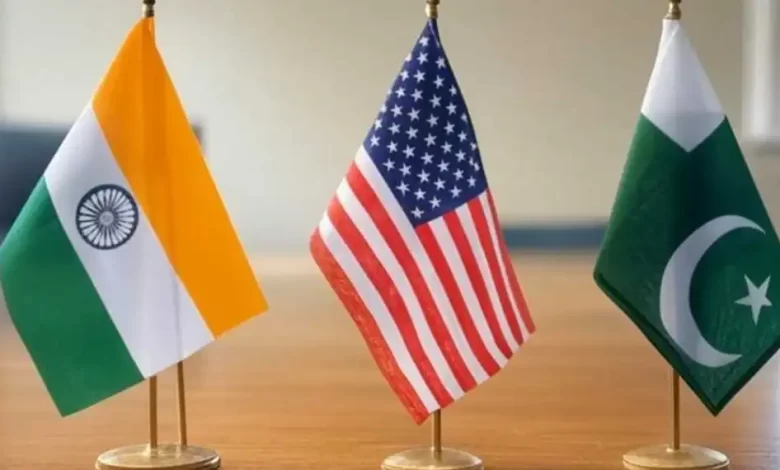
As Donald Trump embarked on his second term in early 2025, the geopolitical ground beneath South Asia began to tremble. The once-vaunted U.S.-India partnership, heralded for years as the cornerstone of Washington’s Asia strategy, has begun to unravel with surprising speed. At the same time, Pakistan, long dismissed in American policy circles as a problematic partner, is reemerging as a trusted and indispensable ally. Few shifts in recent memory have been as stark, or as telling, about where U.S. power and priorities are now headed.
India’s Waning Glow in Washington
For years, New Delhi basked in the perception of being America’s frontline partner against China. That image has collapsed under the weight of protectionism, opportunism, and defiance. India’s trade practices, described in Washington as outright exploitative, have widened the U.S. deficit to nearly $40 billion by 2025. Instead of addressing legitimate concerns, Prime Minister Narendra Modi’s government has doubled down, only inviting retaliatory tariffs from Trump’s administration. Duties of 25 percent, later hiked to 50 percent in critical sectors, are a direct response to India’s refusal to play fair.
The squeeze has not been limited to trade and energy. Trump’s imposition of a staggering $100,000 fee on H-1B visas, a program heavily used by Indian tech workers, has sent shockwaves through India’s IT sector. What was once a symbol of opportunity and collaboration has become a costly burden, deepening the sense in New Delhi that Washington no longer sees India as a favored partner.
The oil issue has been an even bigger flashpoint. While the West tried to starve Moscow’s war machine, India gleefully bought up cheap Russian crude, pocketing discounts while undermining collective sanctions. Trump has not minced words, openly rebuking Modi for funding Russia’s aggression. For all of New Delhi’s talk of being a responsible power, its willingness to undercut Western unity has exposed its unreliability.
The fallout has been swift: stalled defense deals, frozen strategic dialogues, and growing skepticism about whether India can ever be more than a transactional partner. Trump still occasionally invokes the “special relationship,” but behind closed doors the trust deficit is glaring. If India thought it could have it both ways, wooing the West while bankrolling Moscow, it gravely miscalculated.
Pakistan’s Strategic Comeback
In sharp contrast, Pakistan has seized the moment with clarity and conviction. Washington’s praise for Islamabad’s counterterrorism cooperation in 2025 is not mere rhetoric. It is rooted in tangible results. American officials have hailed Pakistan’s intelligence-sharing and operational support against ISIS and al-Qaeda remnants as “phenomenal.” That word, rarely used in diplomatic circles, underscores just how far relations have come.
Military engagement is back on the table. New arms deals, joint training exercises, and high-level defense dialogues are once again part of the bilateral agenda. Pakistan is no longer treated as a reluctant partner. It is being recognized as a cornerstone of regional stability. And unlike India, Islamabad has not sabotaged Western efforts on the global stage. It has instead projected itself as a steady, disciplined, and cooperative ally.
The economic sphere tells a similar story of renewal. The landmark April 2025 agreement between Pakistan’s Crypto Council and World Liberty Financial, an American firm with ties to the Trump family, signals a new era of economic partnership. This deal is not charity; it is business rooted in mutual gain. For Pakistan, it symbolizes a long-awaited departure from the dependency model. For the United States, it reflects trust in Pakistan’s forward-looking financial ecosystem.
The New Balance of South Asia
Trump’s second-term policy is brutally simple: reward cooperation and punish defiance. India has chosen the latter path by hoarding Russian oil, clinging to protectionism, and treating Washington’s concerns with disdain. The $100,000 H-1B fee only underscores how far New Delhi’s standing has fallen. The consequence is a diplomatic freeze unlike anything seen in decades.
Pakistan, on the other hand, has chosen wisely. By aligning with U.S. counterterrorism objectives, presenting itself as a responsible regional actor, and building credible economic partnerships, it has shown that it is not a liability but an asset. The message is clear: in South Asia’s recalibrated order, Pakistan is climbing while India is slipping.
A Tale of Two Choices
The story of 2025 is not about American unpredictability. It is about the choices made in New Delhi and Islamabad. India chose arrogance and opportunism, only to find itself isolated. Pakistan chose cooperation and vision, and today it reaps the rewards of renewed trust and relevance.
As Trump redefines America’s alliances, Pakistan is emerging not as a client state but as a partner of consequence. India, by contrast, is discovering that empty slogans and opportunistic diplomacy cannot substitute for reliability. South Asia’s balance is tilting, and this time it is tilting toward Islamabad.
The author is a researcher and freelance journalist based in Islamabad.