Himachal Pradesh Brothers Defend Polyandrous Marriage, Embrace Hatti Tribe’s Jodidar Tradition

Shimla, India
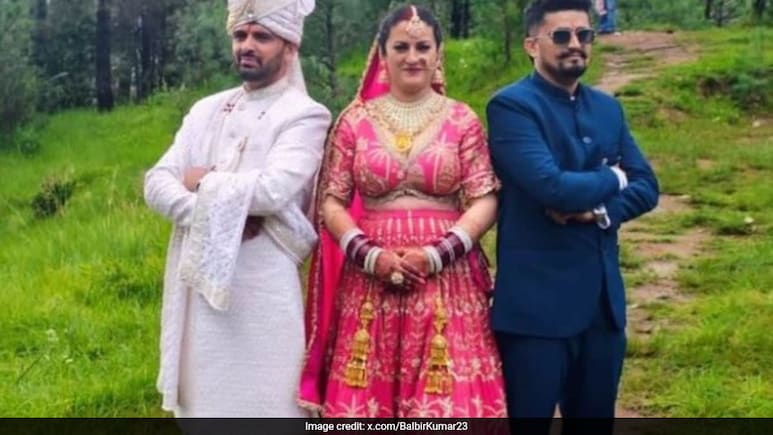
In a rare and culturally significant event, two brothers from Himachal Pradesh’s Hatti tribe have publicly defended their decision to marry the same woman under the ancient practice of Jodidar Pratha, a form of fraternal polyandry. The vibrant three-day wedding, held in Shillai village from July 12, has sparked both admiration and debate across India, with viral videos showcasing the Hatti community’s rich traditions.
Despite criticism, the trio insists their union is consensual, rooted in cultural pride, and aimed at preserving family unity.A Celebration Steeped in TraditionThe wedding of Sunita Chauhan from Kunhat village to brothers Pradeep and Kapil Negi of Shillai’s Thindo family drew hundreds of villagers to the Trans-Giri region of Sirmaur district. The three-day ceremony, marked by traditional folk songs, dances, and rituals, celebrated the Hatti tribe’s centuries-old custom of Jodidar Pratha, also known as Draupadi Pratha after the Mahabharata’s Draupadi, who married the five Pandava brothers. Videos of the event, shared widely on platforms like X, captured the communal joy and cultural significance of the union.
Sunita, Pradeep, and Kapil emphasized that their decision was mutual and free from coercion. “I was aware of the tradition and chose it willingly,” Sunita told media, expressing respect for the bond they share. Pradeep, a government employee with the Jal Shakti Department, added, “We followed this tradition publicly because we’re proud of it. It was a joint decision.” Kapil, who works abroad in hospitality, echoed this sentiment: “We’re ensuring support, stability, and love for our wife as a united family. Transparency is our foundation.”
Jodidar Pratha: A Cultural and Economic Anchor
Jodidar Pratha, legally recognized under Himachal Pradesh’s revenue laws as “Jodidara,” allows multiple brothers to marry one woman, a practice historically designed to preserve ancestral land in resource-scarce Himalayan regions. Kundan Singh Shastri, general secretary of the Kendriya Hatti Samiti, explained, “This tradition, thousands of years old, prevents land division, fosters brotherhood, and enhances security in tribal societies.” It also ensures efficient management of scattered farmlands, a critical concern for highland farming communities.
In such arrangements, the wife alternates time with each husband based on a mutually agreed schedule, and children are raised collectively, with the eldest brother typically named the legal father under the Wajib-ul-Arz, a village record of customs. The Hatti community, granted Scheduled Tribe status in 2022, spans roughly 450 villages across the Trans-Giri region, with an estimated population of 300,000. Similar practices exist in Uttarakhand’s Jaunsar-Bawar region and Himachal’s Kinnaur district, though their prevalence is waning.
Legal Recognition Amid National Controversy
While polyandry is prohibited under India’s Hindu Marriage Act and the Bharatiya Nyaya Sanhita, the Himachal Pradesh High Court protects Jodidar Pratha for tribal communities under the “Jodidar Law,” citing its cultural significance. Ransingh Chauhan, a lawyer and legal advisor for the Central Hatti Committee, noted, “Hundreds of such marriages occur in the region. This is a regular phenomenon, not an anomaly.” Over the past six years, at least five polyandrous marriages have been recorded in Badhana village alone, reflecting the tradition’s persistence in remote areas.
The public nature of the Negi-Chauhan wedding, however, has drawn scrutiny. Social media reactions, as seen on X, range from fascination with the Mahabharata connection to criticism of the practice’s relevance in modern times. One user remarked, “It’s rooted in preventing land disputes, but is it still justified?” Another countered, “If live-in relationships are accepted, why judge this tradition?”
Defending Cultural Identity Against Criticism
The Negi brothers remain steadfast in the face of online backlash. In a Facebook video, Pradeep declared, “I don’t care about social media criticism. This tradition has been followed for generations, and we’ll keep advocating for our culture.” Kapil added, “We didn’t marry for headlines. Our goal is to stay united and love each other.” The brothers, from a low-income family with limited land, emphasized that their marriage reflects practical and cultural values, not a quest for fame.
Community leaders like Ramesh Singta of Hatti Vikas Manch argue that Jodidar Pratha is integral to the tribe’s identity, a factor in their 2022 Scheduled Tribe designation. “Polyandry is practiced in about 150 villages here,” Singta told PTI. “It’s part of our heritage.” However, anthropologists note that urbanization and education are reducing its prevalence, with some, like Kundan Singh Shastri, predicting a “slow death” for the custom as younger generations move to cities.
A Tradition in Transition
The wedding has reignited debate about balancing cultural preservation with modern values. Supporters, like local resident Balma Devi, argue that polyandry fosters healthy family dynamics and economic stability. “Relations stay strong, and land remains intact,” she said. Critics, including former scholar O.P. Sharma, raise concerns about women’s autonomy, though Sunita’s insistence on her voluntary choice challenges such narratives.
As the Hatti community navigates a changing world, the Negi-Chauhan marriage stands as a bold affirmation of Jodidar Pratha’s enduring significance. For Pradeep, Kapil, and Sunita, their union is not just a marriage but a testament to cultural pride and familial unity in the face of modern scrutiny.


