Washington, D.C.
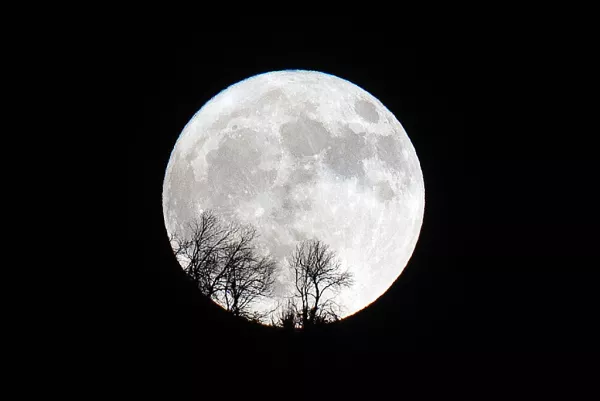
The Trump administration has unveiled an ambitious plan to deploy a nuclear reactor on the moon by 2030 to power a permanent human base, escalating a high-stakes race with China and Russia. The directive, issued by acting NASA Administrator Sean Duffy in July and reported by NPR, aims to secure U.S. dominance in lunar exploration but has sparked concerns over feasibility, costs, and geopolitical motivations.
A Strategic Push for Lunar Power
The directive accelerates NASA’s efforts to establish a sustainable lunar presence through its Artemis program, which targets crewed landings by 2027. Duffy emphasized the urgency during a press conference on August 5, stating, “There’s a prime spot on the moon with ice and sunlight. We want to claim it for America before others do.” He highlighted the lunar south pole, a region rich in water ice and strategic value, as a key target. However, China and Russia’s joint plan to build a nuclear-powered International Lunar Research Station (ILRS) by 2035 has intensified competition, with fears that the first nation to deploy a reactor could claim exclusive “keep-out zones” under the Artemis Accords.
Why Nuclear Power?
Unlike Earth, where solar panels and batteries can rely on a stable environment, the moon’s two-week-long nights and extreme cold make solar power unreliable for sustained operations. “Solar alone won’t cut it,” said Roger Myers, a space-based nuclear power expert. “Nuclear is essential for continuous energy to support human habitats.” NASA’s reactor, designed to produce at least 100 kilowatts—enough to power roughly 70-80 U.S. homes—would use a controlled nuclear reaction in uranium fuel to generate heat, which is then converted into electricity. Unlike Earth’s water-cooled reactors, lunar reactors would rely on large radiators to dissipate heat into space due to the absence of an atmosphere or water bodies.
How It Works: Engineering for the MoonThe lunar reactor’s design mirrors terrestrial nuclear systems but is adapted for the moon’s harsh environment. Bhavya Lal, a former NASA associate administrator, explained that the reactor would operate at higher temperatures and use radiators to manage excess heat. NASA’s directive calls for a reactor capable of launch by late 2029, to be transported on a heavy-class lander with a 15-metric-ton payload capacity. In 2022, NASA awarded three $5 million contracts to companies to develop 40-kilowatt reactor designs, but the new goal of 100 kilowatts reflects a more ambitious vision.
Risks and Challenges
While the moon lacks wind or water to spread radioactive fallout, risks remain. Moonquakes and meteorite strikes could damage a reactor, though experts like Patrick McClure of SpaceNukes argue the probability is low. The primary concern lies in launching radioactive material through Earth’s atmosphere. McClure noted that the uranium fuel would have low radioactivity at launch and wouldn’t be activated until reaching a “nuclear safe orbit” 621 miles above Earth, minimizing public risk in case of a launch failure. However, Kathryn Huff, a nuclear engineering professor, stressed the importance of flawless reentry protocols if the reactor is decommissioned, citing the 1978 Kosmos 954 incident, where a Soviet satellite’s nuclear reactor scattered debris over Canada.
A Tight Timeline Amid Budget Cuts
NASA’s 2030 deadline faces significant hurdles. The agency is grappling with a proposed 24% budget cut for 2026, reducing funding from $25 billion to $19 billion, though recent Congressional discussions and Trump’s One Big Beautiful Bill Act have allocated $10 billion through 2032 for lunar and Mars missions. Developing the reactor could cost up to $3 billion over five years, according to Lal and Myers, straining NASA’s resources. Additionally, a 20% workforce reduction through a deferred resignation program adds complexity. Huff called the timeline “extremely difficult,” advocating for a multiyear authorization process involving NASA, the Department of Energy, and international partners to ensure safety and scientific rigor.
Geopolitical Stakes and Scientific Priorities
The directive reflects fears that China and Russia’s ILRS could establish territorial dominance if completed first. Duffy warned that a rival reactor could “significantly inhibit” U.S. Artemis plans, particularly at the lunar south pole, where water ice could support future lunar economies. However, Huff urged NASA to prioritize science over geopolitics, emphasizing collaboration with allies under the Artemis Accords, signed by 56 nations but not China or Russia. “This shouldn’t be about claiming lunar real estate,” she said. “It’s about advancing human knowledge and exploration.”
The Global Race Intensifies
China’s Chang’e-8 mission in 2028 will lay the groundwork for the ILRS, with Russia contributing its expertise in space-based nuclear technology. Both nations aim to complete their reactor by 2035, though Russia’s recent lunar failures, like the Luna-25 crash, raise doubts about their timeline. Meanwhile, NASA’s Artemis program remains the only effort with a proven history of human lunar landings, giving the U.S. a potential edge. Posts on X reflect mixed sentiment, with some users praising NASA’s ambition as a step toward lunar AI data centers, while others question the feasibility amid budget constraints.
As the U.S., China, and Russia vie for lunar supremacy, the nuclear reactor race underscores the blend of scientific ambition and geopolitical strategy shaping the next chapter of space exploration. NASA’s success could secure a lasting American presence on the moon—or risk ceding ground in a new era of cosmic competition.