Experts Say People, Trade, and Technology Sustain U.S.–India Partnership

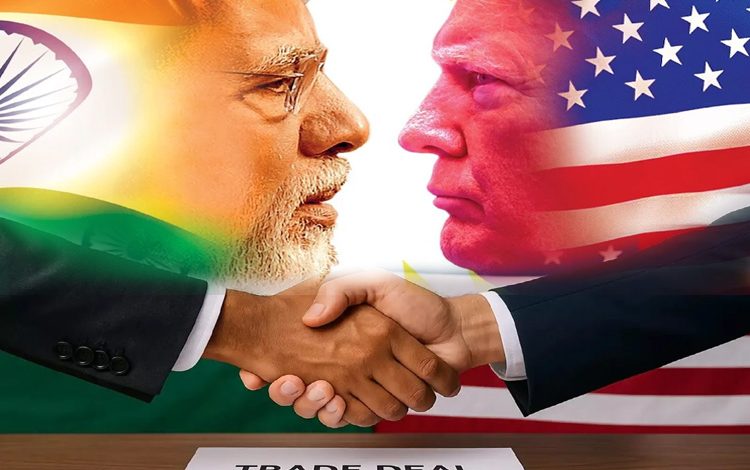
Despite entering a strained phase, the U.S.–India relationship remains deeply interconnected, with experts saying immigration, trade, and technology continue to anchor ties between the world’s two largest democracies.
Scholars, policymakers, and political leaders discussed challenges and opportunities in bilateral relations during a panel on U.S.–India ties hosted by the Foundation for India and Indian Diaspora Studies (FIIDS) in Milpitas, California, in the heart of Silicon Valley.
Khanderao Kand, president and chief of policy and strategy at FIIDS, expressed optimism about the long-term future of the relationship, particularly in the area of immigration.
“Some of the issues that are there now will get resolved within a few months,” Kand said. “About immigration, especially of the Indians who now live in the U.S., this country needs the immigrants as much as the immigrants need the opportunities available here.” He described the situation as a “win-win,” noting that Indian professionals—especially in the technology sector—help fill critical talent gaps in the U.S. economy.
FIIDS is a U.S.-based nonprofit think tank focused on engaging the Indian and South Asian diaspora to strengthen collaboration in international affairs, education, science and technology, geopolitics, trade, and counterterrorism.
“We facilitate dialogues between experts from various fields so they can exchange views,” Kand said, adding that the organization’s work centers on the broader interests of the Indian American diaspora, including the U.S.–India partnership, the Indo-Pacific region, and diaspora-related issues.
Kand acknowledged concerns over the Trump administration’s tariff policies and immigration stance but said FIIDS has prioritized advocacy over litigation. He pointed to a significant decline in international student enrollment at U.S. universities—about 30 percent—as one of the negative consequences of recent policy decisions.
“That is a major loss for universities and for research-driven innovation that fuels U.S. businesses,” he said.
Kand also warned of wider economic repercussions linked to immigration restrictions, noting that immigrants create positive ripple effects across the economy. He emphasized that many Indian immigrants arrive well educated at no cost to U.S. taxpayers and go on to make substantial economic contributions. He said pressure from U.S. industry played a role in lawsuits filed by 20 states challenging steep increases in H-1B visa fees.
While FIIDS does not engage directly in legal action, Kand said the organization focuses on awareness and outreach, maintaining dialogue with lawmakers, administration officials, and federal agencies to ensure policymaking reflects its broader societal and economic impact.
Panelists were also asked to identify areas where U.S.–India cooperation could strengthen by 2026. Dinsha Mistree, a research fellow at the Hoover Institution and Stanford University affiliate, highlighted trade and energy.
“Hopefully this trade deal between the U.S. and India will soon get done,” Mistree said, cautioning that expectations for a comprehensive agreement were unrealistic and that any deal would likely need revisions within five years.
Mistree identified energy, technology, and defense as areas of strong potential cooperation, citing nuclear energy, natural gas, and oil as sectors aligned with India’s growing needs and U.S. policy priorities. He also noted the significance of private-sector technology investment and pointed out that more than one million Americans live in India, underscoring the two-way nature of diaspora ties.
Dr. Vijay Chauthaiwale, who oversees foreign affairs for India’s ruling Bharatiya Janata Party and coordinates with the Indian diaspora, echoed these views. He said that beyond trade disputes, emerging technologies—including defense technologies—and energy cooperation would likely become central priorities.
Mistree added that security cooperation, including counterterrorism, remains relevant even if it attracts less public attention.
“I’d also like to see counterterrorism as a focus, but who knows if that will be on the agenda,” he said.
Another panelist, Vinita Gupta, highlighted India’s government-led approach to technology as a model the U.S. could learn from, particularly as artificial intelligence advances. She cited India’s use of digital platforms such as UPI and Aadhaar to reduce friction and broaden public access.
“India did a great job of using technology to mobilize the masses and remove friction from the system,” Gupta said, contrasting it with the more limited government–private sector collaboration in the U.S. She argued that stronger partnerships, combined with timely regulation, could help avoid challenges seen in areas like social media.
“India has done a better job of balancing innovation and governance,” Gupta said, adding that this approach could benefit the United States.