Trump in Southeast Asia: Cease-fire, Ceremonies, and the Limits of Regional Diplomacy

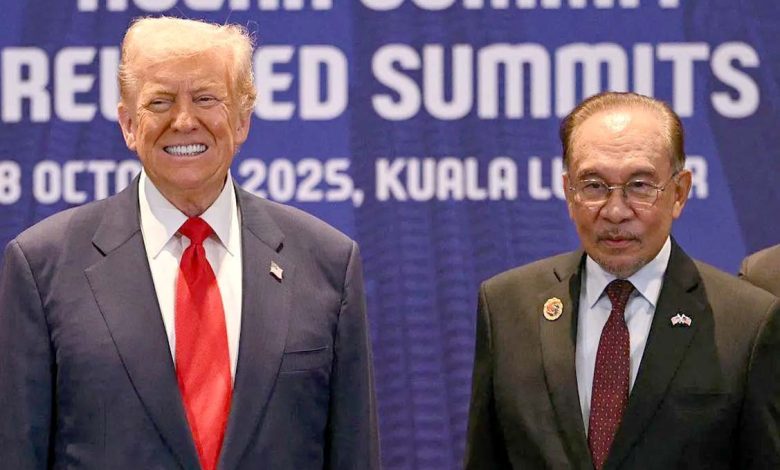
Kuala Lumpur — U.S. President Donald Trump opened his Asian summit tour this week in Malaysia, joining leaders of the Association of Southeast Asian Nations (ASEAN) for their biannual gathering, which spotlighted both the group’s diplomatic pageantry and its enduring limitations.
At the summit, Trump presided over a cease-fire signing between Thailand and Cambodia, ending months of hostilities over a disputed border temple. The truce, brokered in July with help from Malaysia and reinforced by Trump’s personal intervention, was presented as a triumph of ASEAN-led diplomacy and a symbolic win for Washington. Yet analysts warn the accord is fragile—more political theater than a durable peace, with implementation left to the two sides and ASEAN monitors.
Trump’s appearance also served as an opportunity to announce trade deals with Thailand, Cambodia, and Malaysia, underscoring his administration’s renewed economic push in the region while keeping China conspicuously sidelined from the spotlight.
The other major development was Timor-Leste’s formal admission as ASEAN’s eleventh member, ending years of delays. The move boosts ASEAN’s inclusivity and introduces another democratic voice, though it also tests the bloc’s cohesion amid deepening U.S.-China rivalry.
Despite these symbolic gains, ASEAN’s consensus-based model continues to constrain its ability to address hard security issues. The crisis in Myanmar remains unresolved as the junta prepares December elections in defiance of ASEAN’s Five-Point Consensus, with member states unable to exert meaningful pressure.
Looking ahead, the Philippines will assume the ASEAN chairmanship in 2026, likely steering attention to maritime disputes with China and attempting to sustain U.S. engagement. Yet as this week’s summit revealed, ASEAN’s strength in ceremony remains unmatched—its strength in enforcement, less so.