Kicking for Peace: How Football Is Bringing South Asia Together

At a time when South Asia remains divided by political tensions and historical grievances, an unlikely force is helping rebuild trust across borders: football. What began as a simple conversation among friends has grown into a rare example of cross-border cooperation driven not by governments, but by educators, students, and the shared human love for sport.
The idea was first discussed by colleagues and friends from Pakistan, Bangladesh, Australia, and India, united by the belief that sports can achieve what politics often fails to—connection, empathy, and dialogue. Despite early setbacks, including strained India–Pakistan relations and repeated visa challenges, the initiative found new momentum through universities willing to believe in the possibility of peace.
The University of the Punjab in Pakistan, Sher-e-Bangla Agricultural University in Bangladesh, and later representatives from Nepal joined hands to host a football festival in Dhaka from November 13–15. Unlike traditional tournaments, this event rejects competition as its central purpose. There will be no finalists, no medals for first or second place. Instead, every player will be recognized equally—an intentional design meant to emphasize unity over rivalry.
Sher-e-Bangla Agricultural University offered to host the tri-nation gathering, where students from Pakistan, Bangladesh, and Nepal will play alongside one another. Overcoming financial hurdles, each participant agreed to fund their own travel, demonstrating a commitment that speaks to the deeper purpose of the event: practicing peace rather than merely advocating it.
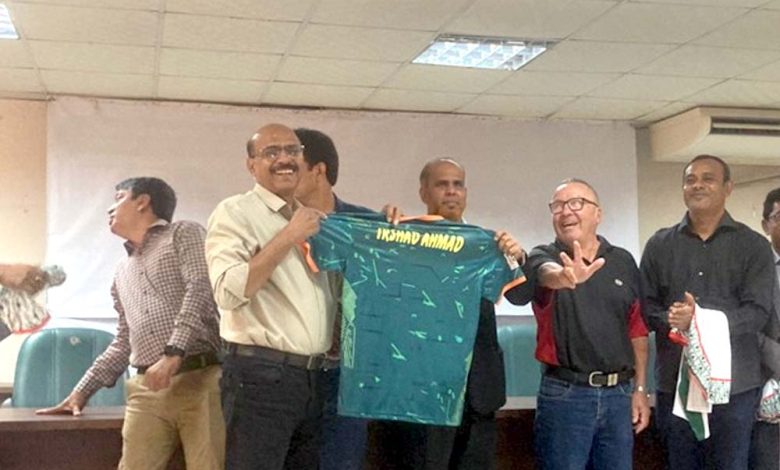
Football kits have already been distributed to all three teams, symbolizing the equality and camaraderie at the heart of the festival. For the young athletes who will share the field, the matches represent far more than sport—they are a statement of hope in a region often defined by conflict.
This initiative stands as a reminder that the youth of South Asia share more dreams than divisions. On the fields of Dhaka, every pass, tackle, and handshake will send a quiet but powerful message: peace is possible when people meet as humans first, and citizens of nations second.