‘Never Imagined This Here’: Indian Village Reels after Interfaith Couple’s Honour Killing.

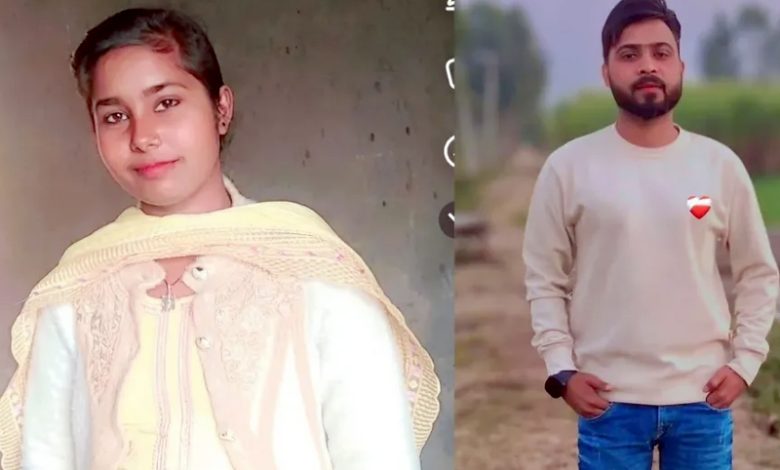
UMRI, UTTAR PRADESH — The killing of a young interfaith couple has stunned a small village in northern India, where Hindu and Muslim families say they have lived peacefully side by side for generations.
The bodies of 19-year-old Kajal, a Hindu woman, and 27-year-old Mohammad Arman, a Muslim man, were found buried near a riverbank on the outskirts of Umri village on January 21. Police allege the couple was beaten to death with a spade two days earlier by Kajal’s three brothers, who have since been arrested and are in custody.
Authorities believe the case is an “honour killing” — a crime in which relatives murder a woman for choosing a partner outside her caste or religion. Deputy Inspector General Muniraj G said the evidence points strongly in that direction.
The murders have cast a heavy silence over Umri, located about 182 kilometres from Delhi and home to roughly 400 families from both communities. Residents told the BBC there has never been a history of religious tension in the village.
“This was the first interfaith relationship anyone here knows of,” said villager Mahipal Saini. “We never imagined something like this could happen in Umri.”
Kajal taught at a private school in the village, while Arman had recently returned from Saudi Arabia, where he had worked for several years before taking up local contract work. Neighbours described both as quiet and reserved, living barely 200 metres apart.
Police say the killings took place at Kajal’s home on the night of January 18–19, when her brothers allegedly caught Arman visiting her. Investigators claim the brothers later attempted to mislead authorities by filing a missing person complaint accusing Arman of abducting Kajal.
Suspicious inconsistencies in their statements led police to the burial site where the bodies were recovered.
Kajal’s father, Ganpat Saini, said he and his wife were away guarding livestock at the time and learned of their daughter’s death only after the bodies were found. Arman’s family said they were unaware of the relationship until friends mentioned the couple had been seeing each other for about two months.
Police have deployed additional personnel in the village to prevent any communal tension, though residents say life has only slowly begun returning to normal.
“There’s no open fear,” said local resident Arif Ali. “But there is a silence that hangs over us now.”
Honour killings remain a persistent issue across India. Official crime data recorded 38 such cases in 2023, though activists say the real number likely runs into the hundreds each year, as many are registered simply as murders.
More than 90 per cent of marriages in India are still arranged within caste and religious boundaries, and couples who cross those lines often seek protection from courts or police. Although Indian law treats honour killings as murder and the Supreme Court has ordered states to establish safe houses for threatened couples, social resistance remains strong.
Human rights activist Kavita Srivastava says weak data and deep-rooted attitudes allow the violence to continue. “When the problem isn’t fully acknowledged, it isn’t acted upon,” she said, adding that legal safeguards alone cannot end honour crimes without broader social change.
For Umri’s residents, the tragedy has shattered the sense of harmony they once took for granted — a grim reminder of how powerful social norms can still turn deadly.