‘Not Able to Breathe’: Denial and Deflection Deepen India’s Air Pollution Crisis

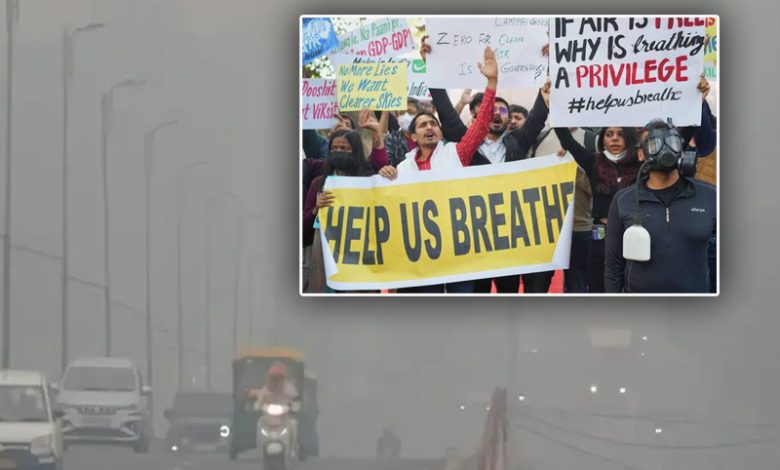
Recent remarks by senior Indian officials have intensified public frustration over what residents and experts describe as official denial and deflection amid a worsening air pollution crisis that contributes to an estimated 1.5 million additional deaths each year.
Earlier this month, Environment Minister Bhupender Yadav told parliament that New Delhi had recorded 200 days of “good” air quality. Pollution experts and opposition leaders criticised the statement, arguing that it relied on selective data that excluded the city’s most polluted months. Days later, Delhi Chief Minister Rekha Gupta compared the air quality index (AQI) to a temperature reading and suggested pollution could be addressed by spraying water. Her remarks drew jeers at a public event, with attendees chanting “AQI” in protest.
Gupta had also earlier approved a cloud-seeding programme, claiming it could induce rainfall to reduce pollution, despite limited evidence of its effectiveness. Residents say such measures reflect a broader unwillingness by authorities to confront the severity of the problem.
“Instead of doing cloud seeding, I hope the government will wake up and take some real action,” said Anita, a 73-year-old Delhi resident. “It’s a shame.”
Environmentalists and data specialists say India’s air quality standards are weaker than those used in countries such as the United States and fall short of World Health Organization guidelines. As a result, air classified as “moderate” can still pose serious health risks, undermining public trust and masking the true scale of exposure.
New Delhi alone records more than 200,000 respiratory cases linked to toxic air. Air quality is tracked through a nationwide network of monitors, sensors, and satellite data, but experts say coverage remains inadequate. Ronak Sutaria, CEO of air-monitoring firm Respirer Living, said the limited number of monitors prevents residents from understanding pollution levels in their own neighbourhoods.
India launched the National Clean Air Programme in 2019, setting a target to reduce pollution by up to 40 percent in 131 cities by 2026. While the programme has funded monitoring systems and dust-suppression measures, experts argue it has failed to meaningfully curb emissions from vehicles and industries—the largest sources of air pollution—alongside crop burning, solid fuel use, and garbage burning.
A 2024 report by the Centre for Science and Environment found that 64 percent of programme funding was spent on dust control, compared with 12 percent on vehicle emissions and less than 1 percent on industrial pollution. “When we are expanding monitoring, it becomes imperative that we also focus on the quality of action,” said Anumita Roychowdhury, the think tank’s executive director.
The health toll is stark. A study published last year in The Lancet linked long-term exposure to polluted air to 1.5 million additional deaths annually in India compared with a scenario in which WHO standards were met. Despite this, junior Health Minister Prataprao Jadhav said earlier this month that there is no conclusive national data directly linking deaths or disease exclusively to air pollution.
Campaigners say this reflects a broader failure to treat air pollution as a public health emergency. “Deaths related to air pollution are not being counted because there are no systematic mechanisms to do so,” said Shweta Narayan of the Global Climate and Health Alliance, noting severe impacts on pregnant women, children, and the elderly.
Public anger is now spilling onto the streets. Earlier this month, Delhi residents staged rare protests demanding urgent government action. Environmentalist Vimlendu Jha said citizens are increasingly fed up and warned that pollution could become a political issue. “There’s more headline and image management than pollution management,” he said, adding that honesty is the first step toward meaningful solutions.
For residents, the consequences are immediate and personal. “Everyone feels the pollution. People are not able to work or even breathe,” said Satish Sharma, a 60-year-old auto rickshaw driver who has cut back his hours due to declining health. “I want to tell the government to please do something about this pollution. Otherwise, people will move away from here.”