Bangladesh’s young voters—many of whom had never believed in the value of the ballot—are now poised to play a decisive role in shaping the country’s political future after helping topple former prime minister Sheikh Hasina.
For much of his adult life, 27-year-old Rafiul Alam saw no point in voting. Eligible since his late teens, he skipped the 2018 and 2024 elections, convinced that his vote carried no weight. Like millions of others in his generation, his political awareness formed under Hasina’s long rule, when opposition parties and observers repeatedly questioned the credibility of elections.
“You grow up knowing elections exist, but believing they don’t really decide anything,” Alam said. Disengagement became normal, as young people focused instead on education, work, or leaving the country.
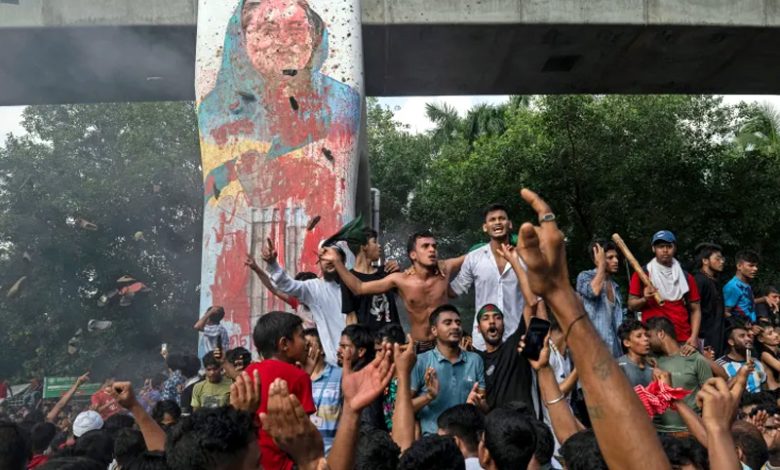
That mindset shifted dramatically in July 2024, when student protests over a government job reservation system escalated into a nationwide uprising. Alam joined demonstrations in Dhaka and helped organize logistics as security forces launched a violent crackdown. The UN later estimated that up to 1,400 people—mostly young—were killed before Hasina fled to India on August 5, ending nearly 15 years in power.
“When she left, it felt like something permanent had cracked,” Alam said. “For the first time, ordinary people felt they could force change.” Now, as Bangladesh heads toward a national election on February 12—the first since the uprising—he plans to vote for the first time.
Bangladesh has around 127 million registered voters, nearly 56 million of them aged 18 to 37, according to the Election Commission. This group makes up about 44 percent of the electorate and is widely viewed as the driving force behind Hasina’s downfall. European Union observers have described the upcoming poll as “the biggest democratic process in 2026, anywhere.”
“Anyone who turned 18 after the 2008 election has never voted in a truly competitive poll,” said Humayun Kabir of the Election Commission. After years of elections widely criticized as lacking credibility—including boycotts in 2014 and 2024, and allegations of ballot stuffing in 2018—this vote carries unusual weight.
Analysts say young voters are less united by ideology than by deep mistrust of institutions that, for most of their lives, failed to represent them. Fahmidul Haq of Bard College described the election as a psychological release after years of repression, with first-time voters likely to shape the direction of Bangladeshi politics.
Yet expectations born out of the 2024 uprising remain fragile. Many young activists hoped new political forces would break with dynastic politics, but disillusionment has grown as the election has narrowed into a contest between two rival coalitions led by the Bangladesh Nationalist Party and Jamaat-e-Islami, with the Awami League barred from participation.
The National Citizen Party (NCP), a youth-led group born from the protests, initially inspired hope as a generational alternative. That optimism faded for many when the party moved toward an electoral alliance with Jamaat-e-Islami, prompting resignations and independent candidacies from several senior and women leaders.
For voters like 24-year-old Moumita Akter, the February ballot is less about miracles than proof. “I want to see whether the system can at least function properly,” she said. Others remain conditional in their support, prioritizing safety, freedom of expression, religious tolerance, and economic security over abstract democratic ideals.
Women voters face an even sharper calculation. Although women make up nearly half the electorate, only about 4 percent of candidates are female. Activists warn that harassment and exclusion have intensified since the uprising, raising doubts about the depth of political reform.
Still, despite scepticism and unresolved tensions, something fundamental has shifted. For young Bangladeshis who helped bring down a long-entrenched leader, political power no longer feels untouchable.
“We now dare to question everyone,” Alam said. “Whoever comes to power, that habit isn’t going away.”