South Asia, home to nearly a quarter of the world’s population, lies at the intersection of climate fragility and geopolitical rivalry. Among its myriad environmental challenges, water scarcity and the politicization of transboundary rivers have emerged as defining issues of both ecological and humanitarian concern.
Climate change has intensified the region’s hydrological volatility—accelerating glacial retreat, disrupting monsoon cycles, and unleashing devastating floods. At the same time, political actors increasingly treat water as a strategic resource rather than a shared lifeline. Nowhere is this more evident than in India’s aggressive hydropower expansion across sensitive basins such as the Brahmaputra and Chenab. Critics argue that these projects not only threaten fragile ecosystems but also risk turning water—a fundamental human necessity—into a weapon of geopolitical leverage, challenging norms of international humanitarian and environmental law.
The Himalayan belt, often called the “Third Pole,” is warming at twice the global average, accelerating the melting of glaciers that feed the Indus, Ganges, and Brahmaputra river systems. This hydrological instability produces destructive floods in the wet season and crippling droughts in the dry, undermining agricultural productivity and food security for hundreds of millions.
For agrarian economies such as India, Pakistan, and Bangladesh, fluctuations in water flow translate directly into economic strain and political instability. Governments across the region have turned to large-scale hydropower to meet energy demand and control floods. Yet, when pursued unilaterally and without ecological or humanitarian safeguards, these projects deepen rather than alleviate vulnerabilities. India’s dam-building spree in its northeast and Jammu & Kashmir epitomizes this paradox—where the rhetoric of development conceals a militarization of water resources.
Hydropolitics on the Brahmaputra and Chenab
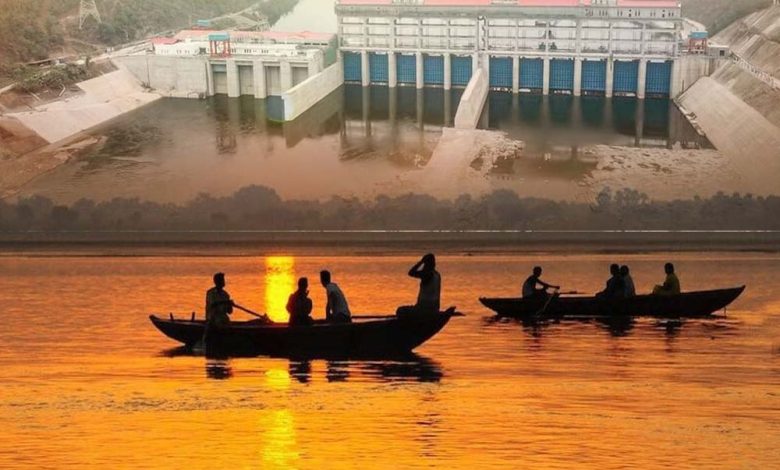
India’s rapid acceleration of hydroelectric projects on transboundary rivers has raised alarms among environmentalists, legal scholars, and neighboring states. In the Brahmaputra basin, India’s portfolio includes the Subansiri Lower (2000 MW), Upper Subansiri (1650 MW), Dibang (2880 MW), and Kamala (1800 MW) projects in Arunachal Pradesh. The Subansiri Lower dam alone—standing 125 meters high—has seen costs balloon from ₹6,285 crore in 2002 to over ₹26,000 crore today, exposing both economic inefficiency and governance opacity.
These dams are being built in one of the world’s most seismically active zones, where frequent landslides and floods already endanger human lives. Despite persistent protests from local and indigenous communities, construction continues—reflecting the systematic marginalization of tribal voices in India’s development model.
Further heightening concerns, India plans 208 new dams across twelve northeastern sub-basins, aiming to generate roughly 65,000 MW of electricity. The scale mirrors China’s Medog project on the upper Yarlung Tsangpo (Brahmaputra). Yet unlike Beijing, India has undertaken its ventures without bilateral coordination or a regional water-sharing framework, endangering Bangladesh’s downstream flows essential for irrigation and food production. The absence of a basin-wide treaty risks transforming the Brahmaputra into a hydrological battleground rather than a river of cooperation.
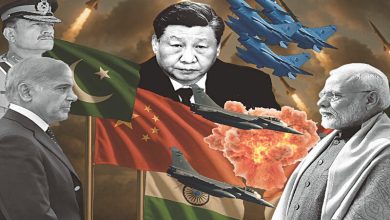
In the western Himalayas, India’s hydro strategy on the Chenab River has taken an overtly geopolitical turn. Projects such as Pakal Dul (1000 MW), Kiru (624 MW), Kwar (540 MW), and Ratle (850 MW) are being fast-tracked even as New Delhi partially suspends its obligations under the Indus Waters Treaty (IWT) with Pakistan. Once hailed as a rare success story in India-Pakistan diplomacy, the IWT now faces erosion through data withholding and storage-capable dam construction, threatening Pakistan’s irrigation and food security.
Pakistani analysts have termed this trend “water terrorism,” warning that the manipulation of flows in an already water-stressed region could trigger humanitarian crises. From a human rights perspective, deliberate obstruction of access to water violates the right to life under the International Covenant on Economic, Social and Cultural Rights (ICESCR) and the UN General Assembly’s 2010 resolution recognizing water as a fundamental human right. The recent approval of a 700 MW hydropower project near the China-India border in Arunachal Pradesh further entwines hydropower with military strategy, turning rivers into frontiers of confrontation rather than corridors of cooperation.
Environmental and Human Costs
Beyond geopolitics, the ecological and social toll of India’s hydropower expansion is immense. Large dams trap sediments, disrupt fish migration, and alter natural flow cycles, devastating downstream agriculture and wetlands. In the Brahmaputra basin, reduced sediment flow threatens to erode soil fertility across Assam and Bangladesh’s deltaic plains, undermining food production.
Reservoirs submerge vast forest tracts and displace thousands of indigenous families, many from vulnerable tribal groups with limited access to justice. Rehabilitation remains inadequate in major projects like Subansiri and Dibang, leaving affected communities without livelihoods or cultural continuity—a humanitarian affront that violates their right to life, dignity, and participation in development decisions.
Toward Cooperative Water Governance
The path forward demands a shift from unilateral exploitation to collaborative water governance. South Asia’s rivers are inherently transboundary; their sustainable management depends on trust, transparency, and shared science. Instead of mega-dams that heighten seismic and ecological risks, states should pursue smaller, decentralized hydro schemes, run-of-the-river projects, and joint flood-forecasting systems—solutions that minimize damage and foster confidence.
Incorporating indigenous knowledge and community participation into water planning can ensure greater equity and resilience. Regional organizations like SAARC could emulate the Mekong River Commission model, crafting new institutional mechanisms for transboundary water diplomacy. International law already requires riparian states to share water resources in an “equitable and reasonable manner.” Reinforcing this principle through joint monitoring and regional treaties could help prevent hydrological competition from spiraling into conflict.
Conclusion
Climate change and water insecurity have made South Asia one of the world’s most precarious regions. India’s escalating dam construction in the Brahmaputra and Chenab basins, cloaked in the rhetoric of development, reveals a dangerous fusion of environmental neglect and geopolitical ambition.
When water—the essence of life—is weaponized for political control, it erodes the moral and legal foundations of coexistence. Sustainable peace in South Asia will depend not on who controls the headwaters, but on whether the region can recognize water as a shared right rather than a strategic asset. Only through cooperative stewardship, transparency, and respect for humanitarian principles can South Asia navigate its intertwined crises of climate change and hydropolitical tension.