South Asia on the Brink of a New Crisis? Pakistan and Afghan Taliban’s conflict
Pakistan–Afghanistan Tensions: Background and Recent Developments

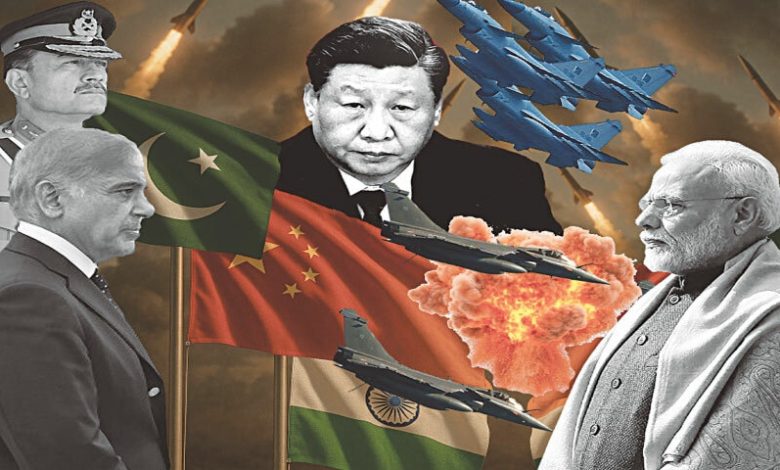
South Asia once again appears to be entering a phase of uncertainty and danger. Rising border tensions between Pakistan and Afghanistan, military operations, claims of airstrikes, and diplomatic statements have raised serious questions about regional peace and stability. At the same time, India’s cautious yet active diplomatic monitoring places this crisis within a broader regional context. The key question is whether this situation will remain confined to limited border clashes or escalate into a larger regional crisis.
1. Pakistan–Afghanistan Tensions: Background and Recent Developments
Relations between Pakistan and Afghanistan have historically been complex, but recent months have seen a troubling increase in border incidents. Pakistan maintains that it was compelled to respond firmly to cross-border attacks and firing incidents. On the other hand, the Afghan Taliban administration rejects these allegations and accuses Pakistan of violating Afghan sovereignty.
Reports of clashes have emerged particularly from various sectors of Khyber Pakhtunkhwa. Both sides claim casualties and the targeting of military objectives; however, independent verification remains limited. This situation has not only placed the armed forces of both countries on high alert but has also created fear and uncertainty among border populations.
2. Military Strategy or Political Messaging?
Pakistan’s robust military response suggests that Islamabad has shifted from limiting border incidents to diplomatic protests toward adopting practical deterrent measures. The apparent objective is to establish deterrence in border areas and convey a clear message that any aggression will be met with an immediate response.
The current Afghan administration, meanwhile, is also striving to maintain an image of strength and sovereignty domestically. In this context, border tensions may also serve internal political purposes. Thus, the confrontation appears not only military in nature but also political and psychological.
3. India’s Role: Not Direct, Yet Significant
Although the current tensions are directly between Pakistan and Afghanistan, India is not entirely detached from the situation. New Delhi is closely observing developments in the region. In the context of Kashmir, the Line of Control, and the regional balance of power, India assesses any development through the lens of its strategic interests.
India may increase diplomatic engagement or attempt to exert pressure on Pakistan in international forums. However, the likelihood of direct military intervention currently appears low. Nevertheless, if Pakistan–Afghanistan tensions become prolonged, their impact will inevitably influence Pakistan–India relations as well.
Regional Security and Economic Implications
South Asia is already grappling with economic challenges, political instability, and security concerns. Any major military crisis will not remain confined to border areas. Trade routes, cross-border commerce, regional connectivity projects, and the investment climate may all be adversely affected.
Particularly, instability or closure of trade corridors between Pakistan and Afghanistan could impact connectivity plans extending toward Central Asia. Moreover, escalation would increase defense expenditures, placing additional strain on already fragile economies.
International Community’s Concern
The United Nations and other global powers typically call for restraint and dialogue in such conflicts. If the situation worsens, international actors may attempt diplomatic mediation. However, given the current global political climate, major powers are focused on other regions, meaning South Asia may not immediately receive urgent international attention.
Nevertheless, if military operations continue deep across borders, international legal and diplomatic questions may arise, further complicating the situation.
Is There Still Room for Diplomacy?
Despite military confrontations, the door to diplomacy is never fully closed. Backchannel contacts between Pakistan and Afghanistan, the role of tribal elders, or mediation by regional countries could help de-escalate tensions. It is in the interest of both nations to prioritize border stability, as sustained confrontation is neither economically bearable nor politically sustainable.
Possible Scenarios
- Limited Confrontation: Tensions subside within weeks, with stricter border discipline on both sides.
- Prolonged Border Crisis: Intermittent clashes continue, sustaining instability.
- Wider Regional Crisis: A major attack or miscalculation could expand the conflict and draw in other regional actors.
At present, the first two scenarios appear more likely, though unforeseen events could rapidly alter the trajectory.
Conclusion: A Delicate Moment of Balance
South Asia currently stands at a delicate juncture. Although tensions between Pakistan and Afghanistan remain largely confined to border areas, their broader implications could be significant. India’s cautious monitoring, international appeals, and domestic political factors add layers of complexity.
Regional peace now depends on prudent leadership, diplomatic foresight, and military restraint. If emotions and displays of force prevail, tensions could escalate into a larger crisis. However, prioritizing dialogue and confidence-building measures could help South Asia step back from the shadow of another potential war.
The coming days will determine whether this crisis becomes a brief historical episode or marks the beginning of a new regional era.
Alleged Terrorist Camps in Afghanistan
Reality, Claims, and Regional Security Challenges
Afghanistan has once again become the center of regional security debates. Since the Taliban’s return to power in 2021, concerns have intensified over whether Afghan territory is being used as a safe haven for various armed groups. Pakistan has repeatedly claimed that elements responsible for cross-border attacks are based in Afghanistan, while the Taliban government rejects these allegations. This investigative report examines these claims, available evidence, regional responses, and ground realities.
1. Nature of the Allegations
According to Pakistani officials, Tehrik-i-Taliban Pakistan (TTP) militants are present in eastern Afghan provinces—particularly Kunar, Nangarhar, Khost, and Paktia—and organize operations from there. Islamabad contends that these elements not only enjoy safe havens but also receive local facilitation.
The Taliban government, however, insists that no organized camps targeting any country exist in Afghanistan and that Afghan soil will not be used against others. Taliban spokespersons have repeatedly described Pakistan’s security challenges as “internal issues.”
2. What Do International Reports Say?
Various United Nations Security Council monitoring reports mention the presence of multiple non-state armed groups in Afghanistan. According to these reports:
- Al-Qaeda-linked elements maintain limited but active networks.
- ISIS-K (Islamic State Khorasan Province) conducts operations inside Afghanistan, including against the Taliban government.
- Estimates regarding the number of TTP fighters vary, and independent verification remains difficult.
These reports suggest that Afghanistan has not been entirely cleared of militant networks.
3. Ground Realities and Geographic Complexities
Afghanistan’s mountainous terrain and rugged border regions complicate surveillance and control. The long Pakistan–Afghanistan border—commonly referred to as the Durand Line—is neither fully secured nor entirely monitorable.
Tribal linkages, informal routes, and historical cross-border movement may facilitate militant mobility. However, concrete independent evidence of permanent, organized “camps” remains limited. Activities often appear to be conducted through temporary hideouts or mobile cells rather than fixed installations.
4. Taliban Government’s Capacity and Intent
A key question is whether the Taliban government has the capacity to control all such groups, if present.
Analysts argue that the Taliban’s priorities include internal stability, addressing economic crisis, and seeking international recognition. Allowing international militant networks free rein would diplomatically harm their interests. Conversely, some analysts suggest that internal factions within the Taliban may limit centralized control over all elements.
5. Regional Implications
If Afghanistan is indeed serving as a launch pad for cross-border attacks, the consequences would extend beyond Pakistan:
- Central Asian states are concerned about ISIS-K expansion.
- China remains sensitive regarding security concerns related to Xinjiang.
- Iran closely monitors its border security situation.
Thus, Afghanistan’s stability is directly linked to the broader region’s security.
6. Is “Terrorist Camp” a Political Term?
Research suggests that the term “terrorist camp” is often used in political narratives to intensify rhetoric. In practice, militant groups frequently operate through dispersed, covert, and mobile networks rather than permanent training bases.
Therefore, independent intelligence, satellite evidence, or neutral monitoring is essential to verify such claims—resources that remain limited at present.
Conclusion: What Is the Way Forward?
The issue of alleged terrorist camps in Afghanistan is not purely military; it is also diplomatic and political.
- Pakistan must emphasize effective intelligence sharing and stronger border management.
- The Taliban government needs to take practical steps to rebuild international trust.
- Regional dialogue and joint security mechanisms could be key to resolving tensions.
Without transparent investigations, joint monitoring, and confidence-building measures, the cycle of allegations and counter-allegations is likely to continue.