Despite Trump’s Tariffs, India’s Fox Nut Boom Looks Beyond the US

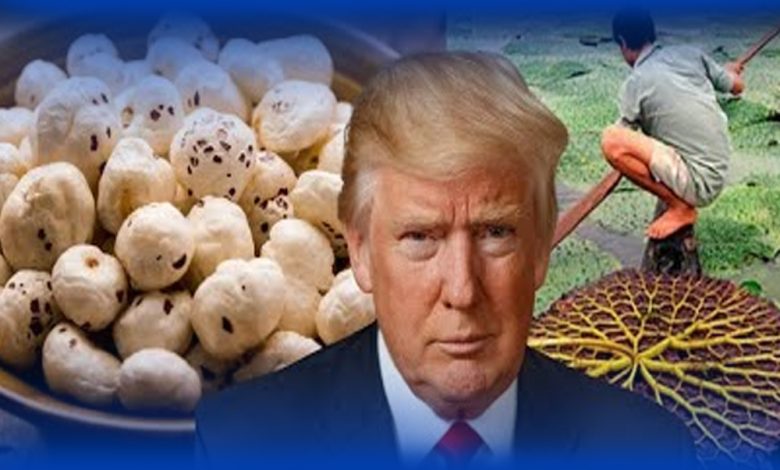
Indian fox nuts, popularly known as makhanas, are feeling the ripple effects of steep US tariffs, but strong domestic demand and emerging export markets are helping cushion the impact.
In Katihar, eastern India, Ravjit Singh, a leather garment trader based in Denver, Colorado, says a 50 percent tariff imposed by US President Donald Trump on Indian goods has sharply increased grocery costs, including fox nuts—a household staple for his family. A 25-gram pack that once cost $2 has doubled to $4, contributing to a monthly grocery bill that has risen to $900 from $500 before the pandemic.
Fox nuts are popped kernels of water lily seeds, grown across tropical and subtropical regions of South and East Asia. Rich in protein, calcium, antioxidants and vitamins, they have gained global recognition as a health food. India dominates around 90 percent of global production, with cultivation concentrated in Bihar, where about 150,000 farmers depend on the crop for their livelihoods.
Trump initially imposed a 25 percent tariff on Indian goods, later raising it to 50 percent over India’s imports of Russian oil. The move has affected several Indian export sectors, including shrimp, diamonds, textiles—and fox nuts. The US accounts for roughly half of India’s fox nut exports.
In 2024–25, India exported about 800 metric tonnes of fox nuts to destinations including Germany, China, the US and the Middle East. Total industry turnover, including domestic sales, stands at about 3.6 billion rupees ($40m), according to Satyajit Singh of Shakti Sudha Agro Ventures, which controls around half of India’s fox nut exports.
Despite a 40 percent drop in his US exports, Kolkata-based exporter Ketan Bengani says he is not overly concerned, citing rapidly rising domestic consumption since the COVID-19 pandemic. Others, like Bihar-based producer Md Gulfaraz, report sharp revenue growth driven by local demand, with sales rising from 5.4 million rupees in 2019 to 45 million rupees in the year ending March 2025.
Domestic consumption has surged as fox nuts regain popularity as a healthy, affordable snack. Once overshadowed by packaged and Western snacks, makhanas have returned to Indian kitchens in flavoured varieties ranging from peri peri to cheese and tomato.
The Indian government has also stepped in, announcing the creation of a makhana board with an initial outlay of one billion rupees ($11m) to strengthen the value chain, improve quality control and support exports. Prime Minister Narendra Modi has publicly endorsed the superfood, saying India should take fox nuts to the world.
Rising returns are encouraging farmers and labourers to switch to fox nut cultivation. Daily earnings for seed collectors can reach 2,000 rupees ($22), more than double typical wages for unskilled labour. Cultivated land has expanded from about 5,000 hectares in 2010 to nearly 40,000 hectares today, while farm-gate prices have climbed from 81 rupees to 450 rupees per kilogramme.
While US tariffs continue to weigh on exports, producers remain optimistic. With demand rising at home and interest growing in new markets such as Spain and South Africa, industry players say India’s fox nut sector is well positioned to weather the trade headwinds.