The looming specter of another US-led war—this time against Iran—casts a dark and dangerous shadow over South Asia. The record of such interventions is unequivocal. From Afghanistan and Iraq to Libya, Somalia, and Palestine, foreign wars have delivered not stability, but devastation: shattered states, endless insurgencies, mass displacement, and generations trapped in conflict.
A confrontation with Iran would be even more explosive. It risks igniting a regional tinderbox already loaded with unresolved disputes, historical grievances, and deeply entrenched hostilities. For South Asia, the stakes could not be higher.
At this critical juncture, the region’s nations face a stark imperative: to rein in their own rivalries and build a collective front for stability before external shocks push the region beyond recovery.
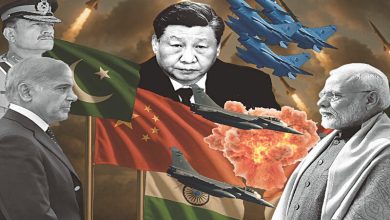
South Asia’s geopolitical fabric is a dense mosaic of overlapping tensions. Nearly every country within the SAARC framework—alongside Iran and China—harbors active or latent territorial disputes with its neighbors. Ethnic and religious identities cut across artificial borders, while marginalized populations are routinely weaponized in proxy struggles.
The region is riddled with insurgencies and simmering unrest: Balochistan straddling the Iran–Pakistan border; Kashmir and Indian Punjab; separatist undercurrents in Xinjiang; the organized Kurdish struggle in Iran; and a growing rights movement in Pakistan’s tribal areas, shaped by repression and echoing the Baloch experience.
Exploiting internal dissent has become a tragic regional habit. History offers grim precedents: India’s past support for Tibetan separatism and its early role in Sri Lanka’s Tamil militancy; Afghan and Indian backing of insurgents in Pakistan’s northwest in the 1970s; and Islamabad’s retaliatory strategy that—amplified by American funding—gave rise to the Afghan mujahideen, and later, the transnational scourges of Al Qaeda and ISIS. The so-called “War on Terror” entrenched a self-sustaining cycle of violence, while in Pakistan it also entrenched military dominance at the expense of democratic development.
These are not relics of the past. They are live fault lines that continue to choke regional stability, fueling sectarianism and ethnic violence in vicious feedback loops. Pakistan’s support for jihad in Afghanistan produced its own nemesis in the TTP. Proxy warfare in Kashmir helped shape the rise of militant Hindu nationalism in India, now reflected in open violence against minorities. This toxicity is spilling across borders, with India’s anti-Muslim majoritarianism provoking retaliatory sentiments against Hindus in Bangladesh—an alarming new fracture in the regional order.
Even diaspora communities are being drawn into this vortex. Baloch dissidents find backing in Indian circles; Sikh separatists attract sympathy among Pakistanis. Such external lobbying does not alter geography or resolve disputes—it hardens them, turning political disagreements into existential, zero-sum struggles.
A war on Iran would act as pure accelerant. The collapse of the Iranian state could unleash waves of refugees, ignite unprecedented sectarian violence, and create a power vacuum inviting intervention by every regional and global actor—by force. The resulting cascade of conflict and displacement would be catastrophic.
The only viable path forward is urgent, sober dialogue. Any meaningful regional compact must rest on an unambiguous commitment to territorial integrity and non-interference. Leadership must come from the region’s heavyweights—China and India.
If Beijing and New Delhi demonstrate the political will to resolve their own border disputes, they would set a transformative precedent. That model could then extend to India–Pakistan, India–Bangladesh, Pakistan–Afghanistan, and engagement with Iran.
The reality is unforgiving: no country in South Asia—China perhaps accepted—can afford another war. China’s current aversion to military adventurism, prioritizing economic corridors and diplomatic leverage instead, offers a crucial template for the region.
South Asia stands at a crossroads shaped by the painful lessons of its own history and the looming disaster just beyond its borders. The choice is clear but narrowing fast: a collective plunge into a maelstrom of conflict, or a courageous, cooperative ascent toward lasting stability. The moment to choose is now.