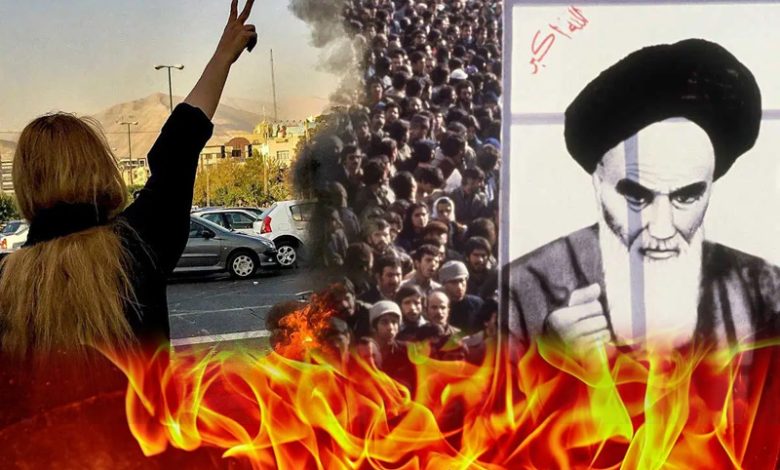
Iran’s latest wave of protests has once again thrust the country into global headlines, with the government and opposition trading accusations of escalating violence and officials blaming foreign interference. The demonstrations mark another chapter in recurring unrest since the 1979 revolution that overthrew the shah and established the Islamic republic.
Beyond domestic protests, Iran’s modern history has been shaped by a series of profound crises, including war, sanctions, nuclear standoffs, regional interventions, natural disasters, and intense political turmoil. Together, these events have played a defining role in shaping the country’s identity over the past five decades.
1979
In February, Ayatollah Ruhollah Khomeini returned to Iran after 14 years in exile in Iraq and France. By April, a referendum declared Iran an Islamic republic. In November, the United States imposed its first sanctions following the seizure of American hostages at the US Embassy in Tehran, a crisis rooted in Washington’s earlier support for the deposed shah and its role in the 1953 coup against Prime Minister Mohammad Mosaddegh.
1980
In September, Iraq invaded Iran, triggering an eight-year war that claimed an estimated 500,000 lives, with Iran suffering heavier losses. The conflict was marked by trench warfare and Iraq’s use of chemical weapons against Iranians and Iraqi Kurds.
1981
In January, the remaining US hostages were released, ending the hostage crisis. In June, a bombing at the Islamic Republican Party headquarters killed dozens of senior officials, including judiciary chief Mohammad Beheshti. Two months later, President Mohammad-Ali Rajai and Prime Minister Mohammad Javad Bahonar were assassinated in another bombing, blamed on the Mojahedin-e Khalq (MEK).
1982
Following Israel’s invasion of Lebanon in June, Iran began funding what would become Hezbollah.
1988
In July, the US Navy cruiser USS Vincennes shot down an Iran Air passenger plane over the Gulf, killing all 290 people on board. A UN-brokered ceasefire between Iran and Iraq took effect in August.
1989
Ayatollah Khomeini died on June 3, and Ayatollah Ali Khamenei was named supreme leader the following day.
1990
A powerful earthquake struck Iran in June, killing around 40,000 people.
1995
In March and May, the US imposed oil and trade sanctions on Iran, accusing it of sponsoring “terrorism” and pursuing nuclear weapons.
1998
The Taliban acknowledged killing eight Iranian diplomats and a journalist in Afghanistan. Iran responded by deploying thousands of troops to the Afghan border.
2002
US President George W Bush labeled Iran part of the “axis of evil,” alongside North Korea and Iraq.
2003
After the US invasion of Iraq in March, Iran began backing Shia militias and political groups. In November, Tehran announced it would suspend uranium enrichment and allow expanded UN inspections, with the IAEA finding no evidence of a nuclear weapons program.
2006
In December, the UN Security Council imposed sanctions on Iran’s nuclear trade after Tehran refused to suspend its nuclear activities.
2007
The United States introduced additional and tougher sanctions in October.
2010
In June, the UN Security Council approved a fourth round of sanctions, expanding the arms embargo and tightening financial restrictions. In September, Iran accused Israel and the US of cyber sabotage after malware was discovered in nuclear systems.
2011
Iran backed Syrian President Bashar al-Assad as his government violently suppressed an uprising sparked by the Arab Spring, deploying the Revolutionary Guard and allied militias.
2012
The European Union began an oil embargo in January. Later in the year, the IAEA reported obstruction at Iran’s Parchin site and growing nuclear capacity, while the rial plunged sharply under the weight of sanctions.
2015
In July, Iran reached the Joint Comprehensive Plan of Action (JCPOA) with world powers, limiting its nuclear program in exchange for sanctions relief and sparking public celebrations at home.
2018
In May, US President Donald Trump withdrew from the nuclear deal, calling it too weak.
2020
In January, Qassem Soleimani, head of the IRGC’s Quds Force, was killed in a US drone strike in Baghdad.
2024
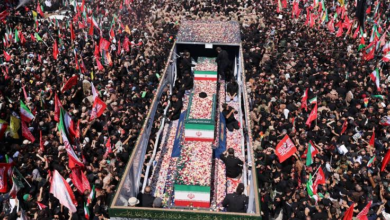
In April, Israel bombed Iran’s embassy in Damascus, killing seven people, including two IRGC generals. In May, President Ebrahim Raisi died in a helicopter crash. In July, Hamas leader Ismael Haniyeh was assassinated in Tehran, with Israel widely believed to be responsible.
2025
In June, Israel launched attacks on Iran, triggering a 12-day war that killed at least 610 Iranians and 28 Israelis, marking the latest and most violent escalation in decades of confrontation.