Pakistan, Bangladesh Boost Defense Ties as Naval Chief Concludes High-Level Visit to Chattogram

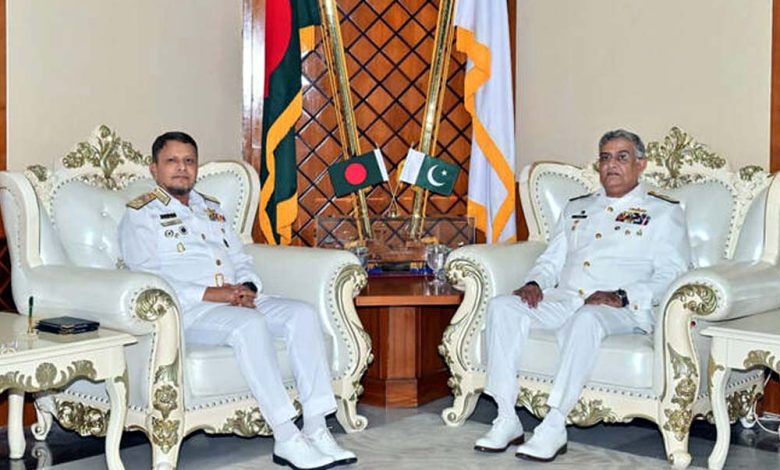
Pakistan and Bangladesh have intensified defense engagement with a high-level naval visit to Chattogram, the Pakistan military said on Thursday, marking one of the clearest signs of warming ties after years of diplomatic distance.
Relations between the two countries have remained strained since the 1971 war, with Bangladesh aligning closely with India and maintaining minimal defense cooperation with Islamabad. But that posture has shifted in recent months following the fall of Sheikh Hasina’s government — a political transition that cooled Dhaka’s ties with New Delhi and created space for renewed outreach with Pakistan.
In this context, the visit of Pakistan’s Chief of Naval Staff Admiral Naveed Ashraf — alongside a port call by the frigate PNS Saif — signals an attempt by both sides to restore working-level coordination and move past historical grievances.
“The next century belongs to the oceans,” Admiral Ashraf said during the trip. “Pakistan must plan today for the ports, trade routes, and maritime industries of tomorrow.”
During the multi-day visit, the naval chief held meetings with Bangladesh’s army, navy and air force leadership, discussed regional maritime security, and attended a reception aboard Saif. He also toured the National Defense College and Bangladesh Naval Academy, praising their professional standards and underscoring the importance of advanced naval education.
While the engagements stop short of a formal defense pact, they reflect a broader strategic recalibration in the Bay of Bengal and Indian Ocean Region. Bangladesh continues long-standing military cooperation with India, but its political transition has introduced new diplomatic dynamics. Pakistan, for its part, has sought to expand maritime partnerships across the region.
The Bay of Bengal and northern Indian Ocean have become increasingly strategic amid growing competition over sea lanes, energy routes, and naval influence. With both states investing in coastal infrastructure and maritime surveillance, naval diplomacy is emerging as an important tool for signaling intent and managing shifting regional alignments.