Bangladesh–India Tensions Escalate after Opposition Leader Threatens India’s northeast

Dhaka’s already strained relationship with New Delhi has come under renewed pressure after a Bangladeshi opposition leader threatened to offer shelter to separatist groups targeting India’s sensitive northeast, citing alleged Indian interference in Bangladesh’s upcoming elections.
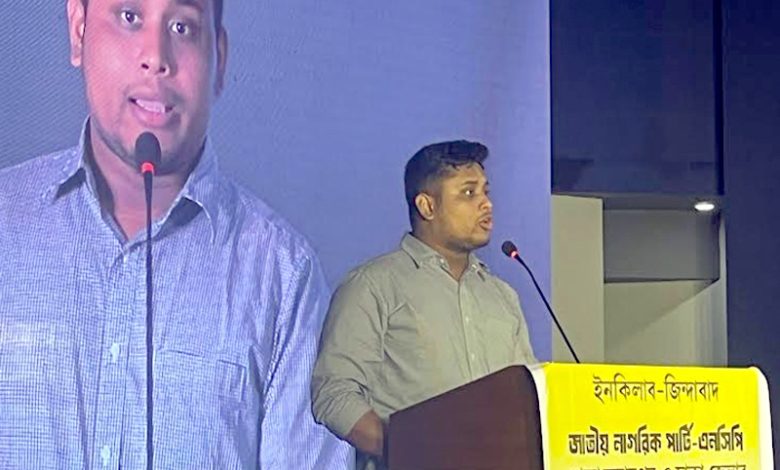
Hasnat Abdullah, a leader of the newly formed National Citizen Party (NCP), issued the warning at a rally in Dhaka on Monday, saying the move would be considered if Bangladesh believed India was attempting to influence the February election.
“If Bangladesh is destabilised, the fire of resistance will spread beyond borders. Since you are housing those who destabilise us, we will give refuge to the separatists of the seven sisters too,” Abdullah said, referring to India’s seven northeastern states.
“I want to say clearly to India that if you shelter forces who do not respect Bangladesh’s sovereignty, potential, voting rights and human rights, Bangladesh will respond.”
The remarks were seen as highly provocative in India, where security in the northeast is a longstanding concern due to insurgencies, porous borders and the region’s strategic position between Bangladesh, Myanmar and China.
Abdullah accused unnamed “vultures” of seeking to exert control over Bangladesh despite its 54 years of independence. He also called for resistance rallies on Victory Day, commemorated on Tuesday, marking Pakistan’s military defeat in the 1971 liberation war. The date coincides with India’s Vijay Diwas, which honours India’s role in the conflict alongside Bengali resistance forces.
The NCP, which draws much of its support from students who led last year’s protests that toppled former prime minister Sheikh Hasina’s Awami League government, has played a role in the appointment of Nobel laureate Muhammad Yunus as head of Bangladesh’s interim government, despite its limited support base.
Relations between Dhaka and New Delhi have remained tense since Hasina fled to India following her ouster last year. She has criticised the interim government’s decision to bar the Awami League from contesting the upcoming election.
Tensions escalated further after an assassination attempt on Sharif Osman Hadi, a prominent figure in last year’s student-led uprising against Hasina. Hadi was shot outside a mosque in Dhaka and was later flown to Singapore for treatment. He remained in critical condition as of Tuesday.
Bangladesh police have launched a manhunt for the attackers, releasing images of two suspects and announcing a reward of about US$42,000 for information leading to their arrest. The Bangladeshi foreign ministry has also summoned Indian High Commissioner Pranay Verma, seeking cooperation in apprehending suspects believed to have fled to or found shelter in India.
Abdullah and other NCP leaders have accused India and the Awami League of colluding in the attack to destabilise Bangladesh, allegations New Delhi has rejected. India’s Ministry of External Affairs summoned Bangladesh’s High Commissioner Riaz Hamidullah, expressing “strong concerns” about Bangladesh’s “deteriorating” security situation.
India said it “completely rejects the false narrative” being promoted by extremist elements and criticised the interim government for failing to conduct a thorough investigation or share credible evidence. New Delhi reiterated its support for peace, stability and “free, fair, inclusive and credible elections” in Bangladesh.
Analysts say anti-Awami League sentiment following last year’s violent crackdown on student protests—reportedly resulting in up to 1,500 deaths—has spilled over into anti-India feeling. A special tribunal last month sentenced Hasina to death in absentia for her role in state-led violence against protesters.
Bangladesh is set to elect 300 lawmakers and vote on a landmark democratic reform package on February 12. Authorities have pledged heightened security, saying political leaders, candidates, rallies and online spaces will be protected.
Observers warn that rising political violence could undermine the interim government’s efforts to restore stability and democracy, while inflammatory rhetoric risks damaging Bangladesh’s regional standing and further straining ties with India.