Snakebites Kill Tens of Thousands in India Each Year as Treatment Gaps Persist

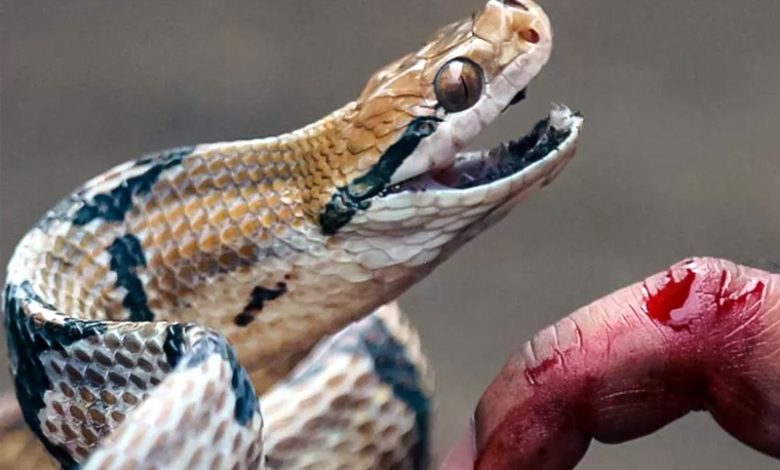
Snakebites continue to claim around 50,000 lives annually in India — roughly half of global deaths from snake envenoming — making the country the world’s hardest-hit by the long-neglected health crisis.
For survivors like Devendra, a farmer who lost his leg after delaying treatment for four days, the consequences can be life-altering. His story, featured in a short film by the Global Snakebite Taskforce (GST), highlights how late access to care often leads to amputations, paralysis, or permanent disability.
While government figures estimate about 50,000 deaths each year, research suggests the toll may be even higher — as many as 1.2 million deaths between 2000 and 2019, or roughly 58,000 annually.
A new GST report found that 99% of healthcare workers surveyed in India and other highly affected countries face serious obstacles in administering antivenom, the only effective treatment. These include poor infrastructure, limited supplies, and lack of training. Nearly half said treatment delays had caused severe complications for patients.
The World Health Organization classifies snakebite envenoming as a top-priority neglected tropical disease, noting that over 5 million people are bitten worldwide each year and more than 100,000 die — most in poor rural communities.
Rural communities at highest risk
In India, deaths are concentrated in central and eastern regions, especially among farmers and tribal populations who work in fields where snake encounters are common. Long distances to hospitals, poor roads, and limited ambulance services often delay care, sometimes fatally.
Cultural reliance on faith healers and home remedies further increases risks, with many victims reaching hospitals only when symptoms become critical.
Limited antivenom coverage
India’s current antivenom only targets the “big four” snake species — the spectacled cobra, common krait, Russell’s viper, and saw-scaled viper. However, dozens of other venomous species across the country lack specific treatment.
Research from AIIMS Jodhpur found that two-thirds of patients treated with standard antivenom for suspected saw-scaled viper bites responded poorly, underscoring the need for region-specific antidotes.
Government action, but uneven progress
In 2024, India launched a National Action Plan aiming to halve snakebite deaths by 2030 through better surveillance, improved antivenom access, stronger medical training, and public awareness campaigns. Health experts welcome the initiative but warn that inconsistent implementation continues to cost lives.
Some states have begun stocking antivenom at local health centres, but many facilities lack trained staff or equipment to manage dangerous side effects.
Advocates are also pushing for snakebites to be made a notifiable disease nationwide — requiring mandatory reporting — to tackle massive under-counting of cases.
“Snakebite deaths begin where political will ends,” said GST member Dr Yogesh Jain. “These are preventable deaths, mostly among the poor. Every second counts — and they deserve a health system that reaches them in time.”
As researchers work to develop broader antivenoms and authorities attempt reforms, India’s snakebite crisis remains one of the country’s most deadly — and most overlooked — public health emergencies.