Saudi executions of two Bangladeshis raise questions of Islamic Law and mosque Sanctity


The execution of two Bangladeshi nationals in Saudi Arabia on 14 October 2026, following their conviction for an act described as immoral inside a mosque in Makkah, has drawn attention to the relationship between Islamic moral principles, the sanctity of religious spaces and the enforcement of Shariah-based law. The incident also raises important questions about judicial transparency, proportionality and the legal rights of foreign nationals.
According to the Saudi Ministry of Interior, the two individuals, identified as Nazerul Islam Abdul Basir and Siti Akhtar, were arrested, investigated and subsequently convicted by a competent court. Their death sentences were imposed under ta’zir, a category of discretionary punishment within Islamic jurisprudence. Saudi authorities stated that the seriousness of the offence and the violation of the sanctity of the location contributed to the judicial decision.
Islamic Teachings on Moral Conduct
Islam establishes clear moral principles governing personal behaviour, social relationships and respect for religious institutions. Sexual relations outside a lawful marriage are prohibited under Islamic teachings, which place considerable emphasis on chastity, personal responsibility and the preservation of family structures.
The Holy Quran states in Surah Al-Isra (17:32): “And do not approach unlawful sexual intercourse. Indeed, it is ever an immorality and is evil as a way.”
This injunction illustrates the importance Islam attaches to preventing conduct considered morally harmful. Islamic ethics also extend beyond the prohibition of particular acts to include modesty, personal discipline, respect for others and responsibility before Allah.
However, Islamic jurisprudence distinguishes between moral prohibitions and the legal requirements for establishing an offence. The precise nature of the conduct in this case was not publicly specified in the Saudi announcement. Consequently, it would be inappropriate to presume that every element of a particular religious offence had been established solely from the description “immoral act.”
The Sacred Status of Mosques in Islam
Mosques occupy an exceptionally important position in Islamic religious life. They serve as places of worship, Quranic education, spiritual reflection and collective religious identity.
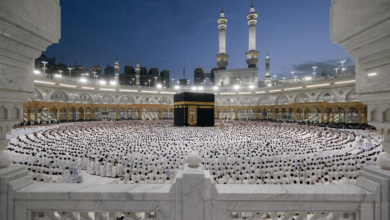
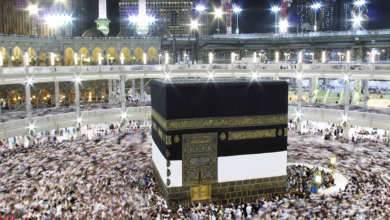
Makkah holds particular significance as Islam’s holiest city, drawing millions of Muslims from around the world for Hajj and Umrah.
The Quran emphasizes the dignity of places of worship. Surah Al-Jinn (72:18) declares: “And the mosques are for Allah, so do not invoke with Allah anyone.”
Within Islamic tradition, Muslims are expected to maintain appropriate behaviour in sacred environments. Actions considered improper in ordinary public settings may acquire additional religious significance when committed in a mosque because they disregard the dignity of a place dedicated to worship.
Saudi authorities explicitly cited the violation of the sanctity of the place and time when explaining the judicial decision. Their statement reflects the importance the kingdom attaches to protecting religious spaces and maintaining public moral standards.
Understanding Shariah-Based Judicial Enforcement
Saudi Arabia’s legal framework draws extensively upon Islamic jurisprudence, including principles governing criminal conduct, public morality and judicial punishment.
In this case, the Saudi court imposed death sentences under ta’zir, which allows judicial discretion in addressing certain offences rather than applying a fixed punishment prescribed for a specific category of crime.
The distinction is significant because the sentences were not publicly identified as a mandatory punishment for a particular act of illicit sexual conduct. Instead, Saudi officials presented them as discretionary penalties reflecting the gravity of the circumstances.
According to the Interior Ministry, the verdicts were upheld by the relevant judicial authority before a royal order authorized their implementation.
Nevertheless, Islamic legal scholarship contains different interpretations concerning the limits of discretionary punishment, the evidentiary standards required for conviction and the application of severe penalties.
For this reason, the Saudi judgment should be understood as an application of the kingdom’s legal framework rather than an uncontested interpretation shared by all Muslim jurists.
Judicial Transparency and Bangladesh’s Concerns
Beyond the religious dimensions, the executions generated diplomatic concern in Bangladesh.
Bangladeshi officials stated that their diplomatic mission had not received advance notification of the executions. Dhaka subsequently sought information from Saudi authorities concerning the charges, judicial proceedings and court verdicts.
Reports also indicated discrepancies between earlier consular records and the offences announced by Saudi authorities.
These developments introduce questions concerning procedural transparency, access to legal representation and the ability of foreign governments to provide consular assistance to their citizens.
Respect for Islamic legal principles and the sanctity of mosques does not remove the importance of establishing allegations through reliable evidence and ensuring that judicial proceedings meet applicable legal safeguards.
Balancing Sacred Values and Justice
The Makkah case demonstrates the seriousness with which Saudi Arabia approaches religious morality and the protection of sacred spaces. Its authorities presented the executions as an expression of their commitment to enforcing Islamic law and preserving public order.
At the same time, the severity of the punishment makes transparency particularly important. Islamic conceptions of justice emphasize fairness, responsibility and the careful examination of evidence alongside moral obligations.
The incident therefore highlights two interconnected considerations: the religious duty to respect places of worship and the judicial responsibility to ensure that punishment follows a demonstrably fair legal process.
Ultimately, protecting the sanctity of mosques and upholding the credibility of Islamic justice require both respect for sacred principles and confidence in the procedures through which those principles are enforced.