Why Bhutan’s Decades-Old Plastic Ban is failing to Curb Waste

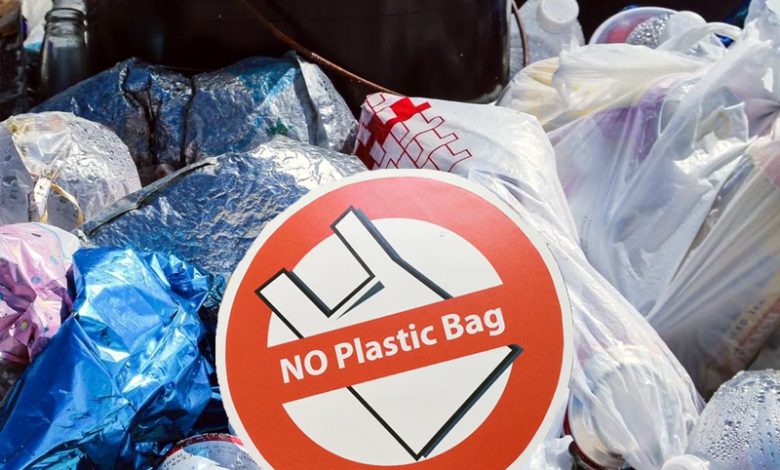
THIMPHU — Nearly three decades after Bhutan banned plastic, the material remains a common sight across the country. Plastic bags still circulate in markets, PET bottles line highways, snack wrappers clog drains, and much of the waste ends up in overflowing landfills. While the ban exists in law, plastic continues to dominate everyday life.
The issue is not a lack of political will or regulation, but a policy framework that has failed to keep pace with changing consumption patterns, weak enforcement capacity, and modern market realities.
Bhutan first introduced its plastic ban in 1999 through notifications issued by the National Environment Commission (NEC), targeting a narrow range of items — plastic carrier bags, doma (betel nut snack) wrappers, and ice-cream pouches. These were seen as high-impact, non-reusable plastics that typically ended up in landfills. The ban has been reinforced several times, most recently in 2019, without substantially expanding its scope.
A Department of Environment and Climate Change (DECC) official said the limited focus was deliberate. “The ban was conceived as a step-wise approach, starting with a small group of clearly identifiable plastic items, with the intention of gradually addressing other single-use plastics,” the official explained.
Under the reinforced rules, environmental clearance is not issued for the manufacture or establishment of facilities producing single-use plastic carrier bags in Bhutan.
However, while the policy remained narrow, Bhutan’s plastic consumption evolved rapidly. An NEC official involved in early enforcement recalled that plastic was rare until the early 1990s. Civil servants returning from Bangkok brought plastic shopping bags as novelty items, while doma wrappers and homemade ice-cream pouches were imported from India.
The ban was originally meant to last three years, during which alternatives would be introduced. That transition never fully materialised.
Today, the largest contributors to plastic waste are no longer doma wrappers or ice-cream pouches, but single-use bags, PET bottles, and packaged consumer goods — items that fall outside the original notifications and remain legally permissible.
The DECC maintains that Bhutan has a comprehensive legal framework through the Waste Prevention and Management Act of 2009, supported by regulations introduced in 2012 and amended in 2016. These laws cover all types of waste and assign implementation to local governments, with the NEC coordinating nationally.
What Bhutan lacks is a plastics-specific law. Officials argue a separate framework was unnecessary since the broader act already covers waste management, though they acknowledge plastics will be addressed more explicitly in future legislative harmonisation.
These gaps help explain why plastic remains so widespread. The ban applies only to a limited set of products, while single-use plastic bags continue to enter the country from abroad. Although bulk shipments are occasionally seized at border checkpoints, inconsistent enforcement, limited staffing, and resource constraints allow large volumes to slip through.
Responsibility for enforcement is shared among multiple agencies. The NEC monitors compliance, while local governments — including thromdes, dzongkhag administrations and gewog authorities — carry out implementation. The Royal Bhutan Police assist when requested, though plastic enforcement is not part of their core duties. Civil society groups, the media and citizens are also expected to play a role through awareness efforts.
In practice, enforcement has been uneven. The DECC admits inspections and penalties are rare in many areas. Earlier NEC notifications imposed fines of Nu 500 for a first offence and Nu 1,000 for repeat violations, yet plastic packaging remains common in markets amid weak monitoring.
At Thimphu’s Centenary Farmers Market, vendors said plastic bags are often brought in discreetly with other goods. Once inside the country, enforcement is minimal. Shopkeepers also face pressure from customers who expect plastic packaging.
One shopkeeper said she buys single-use plastic bags for Nu 240 to Nu 270 per kilogram. “It’s an extra cost, but difficult to avoid. Without plastic bags, many customers refuse to buy,” she said.
Waste figures reflect the scale of the problem. Bhutan generates about 172 tonnes of waste daily, with Thimphu alone producing around 50 tonnes. Plastics make up roughly 36 per cent of total waste, and an estimated 13 per cent of plastic waste ends up in the riparian soils of the Wangchhu river basin.
Most remaining plastic is sent to landfills, worsening overflow and long-term environmental risks. Although some material recovery facilities exist, they are insufficient to handle the growing volume of plastic waste. Even confiscated plastics often end up in landfills, undermining the ban’s purpose.
While reuse is frequently promoted, weak recycling systems mean most plastic eventually becomes waste. The DECC also points to limited awareness among lawmakers, enforcement bodies, retailers and the public about the environmental harm caused by plastic bags.
Changing market practices and product substitutions have further blurred the lines between what is banned and what remains legal — adding to confusion and weakening the policy’s impact.
Together, these factors explain why Bhutan’s long-standing plastic ban, though well-intentioned, has struggled to deliver meaningful reductions in plastic pollution.