Campaigners Cite Alleged Safety Flaws in Boeing 787 That Crashed in India

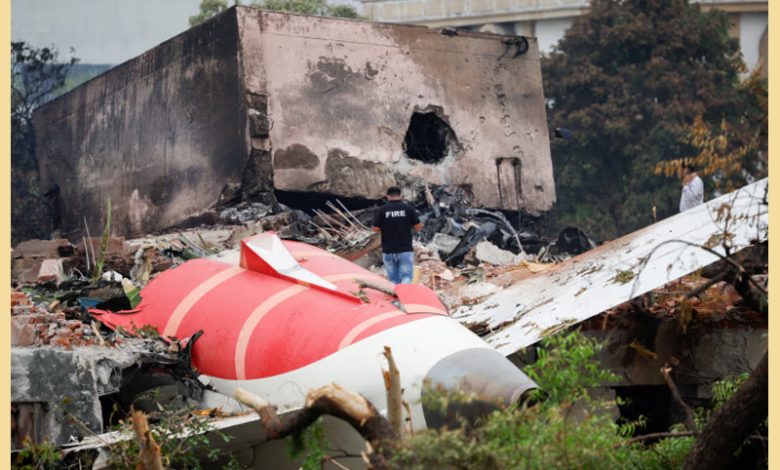
Aviation safety campaigners in the United States claim they have evidence that a Boeing 787 Dreamliner which crashed in India last year had a long history of serious technical problems, including an in-flight fire.
The aircraft crashed on June 12 shortly after taking off from Ahmedabad on a flight to London, killing all 260 people on board. The claims have been put forward by the US-based Foundation for Aviation Safety (FAS), which says it has submitted a presentation to the US Senate detailing its findings based on documents that have come into its possession.
The official investigation into the crash is still under way. An interim report released in July, however, sparked widespread controversy and speculation. Boeing has declined to comment.
The aircraft involved, registered as VT-ANB, was among the earliest Boeing 787s produced. It first flew in late 2013 and entered service with Air India in early 2014.
According to the Foundation, documents indicate the aircraft experienced technical failures from its very first day in service. The group alleges these problems stemmed from what it describes as “a wide and confusing variety of engineering, manufacturing, quality, and maintenance issues.”
Reported faults include electronics and software failures, repeatedly tripping circuit breakers, damaged wiring, short circuits, power losses, and overheating of electrical system components.
The group also highlights a January 2022 incident in which a fire reportedly broke out in the P100 power distribution panel—one of five units that distribute high-voltage electrical power generated by the engines. The pilots reportedly began receiving fault messages during descent into Frankfurt Airport, with the damage only discovered after landing. According to FAS, the damage was so extensive that the entire panel had to be replaced.
The Boeing 787 relies more heavily on electrical systems than earlier aircraft designs, having replaced many mechanical and pneumatic components to improve efficiency. However, this approach caused difficulties early in the aircraft’s service life, including a major battery fire aboard a Japan Airlines 787 in 2013 that led to the temporary grounding of the global fleet. The P100 panel itself had been redesigned in 2010 following a fire on a test aircraft.
The Foundation says its report has been sent to the US Senate Permanent Subcommittee on Investigations, which last year held hearings into what it described as Boeing’s “broken safety culture.”
The official probe into the Ahmedabad crash is being conducted by India’s Aircraft Accident Investigation Bureau (AAIB), with participation from US officials as the aircraft and engines were designed and manufactured in the United States.
One month after the crash, the AAIB issued a preliminary report—a standard step intended to summarize known facts without drawing conclusions. However, a brief section of the 15-page report generated intense controversy.
The report stated that moments after takeoff, the aircraft’s fuel control switches were moved from the “run” to the “cut-off” position, cutting fuel supply to the engines and causing a rapid loss of thrust. Although the switches were moved back to restart the engines, it was too late to avert the crash.
It further noted that a cockpit voice recording captured one pilot asking the other why the cut-off had been selected, with the second pilot responding that he had not done so. No verbatim transcript was released.
That account prompted some commentators in India and the US to suggest pilot error as the cause of the accident. However, lawyers representing victims’ families, safety advocates, pilots’ associations, and technical experts have since pushed back strongly, arguing that the focus on pilot actions may be misleading and has diverted attention from potential technical failures.
Since the report’s publication, the BBC has spoken to pilots, engineers, and accident investigators who say key information remains missing, even as theories about the cause of the crash vary widely.
The Foundation for Aviation Safety is led by Ed Pierson, a former senior manager at Boeing’s Renton factory in Seattle and a long-time critic of the company’s safety and quality controls. He has previously described the AAIB’s preliminary report as “woefully inadequate.”
The group says its concerns extend beyond the crashed aircraft, citing an examination of around 2,000 failure reports involving hundreds of 787s operating in the US, Canada, and Australia. These reportedly include incidents such as water leaking into wiring bays—an issue previously flagged by the US Federal Aviation Administration.
Boeing has consistently maintained that the 787 Dreamliner has a strong safety record and remains a safe aircraft. Prior to the Ahmedabad crash, the model had flown for nearly 15 years without a single fatal accident.
The BBC says it has not seen the documents cited by the Foundation. Boeing declined to comment further while the investigation remains ongoing and referred all inquiries to India’s Aircraft Accident Investigation Bureau.