Nepal’s Deadly Crackdown Exposes South Asia’s Human Rights Enforcement Void

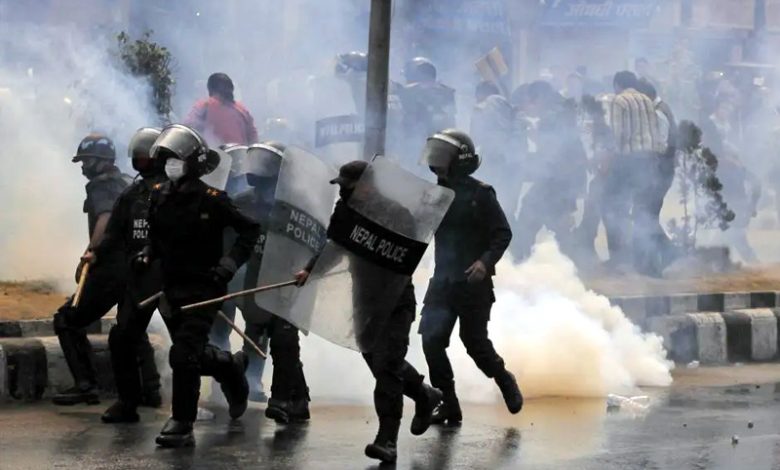
When Nepal’s security forces opened fire on demonstrators in September 2025, killing at least 75 people, they laid bare a core weakness of international human rights law in South Asia: obligations exist on paper, but enforcement is effectively absent. Police fired 2,642 live rounds into crowds that included schoolchildren, barely five minutes after declaring an emergency curfew, and reportedly aimed at heads and chests. Yet four months on, as Nepal approaches its Universal Periodic Review (UPR) on January 21, 2026, not a single officer has been prosecuted.
This chasm between legal standards and real consequences illustrates how treaty commitments can be rendered hollow when no binding adjudication exists to compel compliance.
Under Article 6(1) of the International Covenant on Civil and Political Rights (ICCPR), arbitrary deprivation of life is prohibited. The UN Human Rights Committee’s General Comment 36 makes clear that “arbitrary” extends beyond illegality to include actions that are unjust, inappropriate, or disproportionate. Lethal force is permissible only as a last resort to protect life from an imminent threat. Nepal’s response failed every element of this test. The protests—sparked by social media restrictions and governance grievances—were peaceful and protected under Article 21 of the ICCPR. There was no imminent threat justifying live fire.
Security forces also failed to provide meaningful warnings or time to disperse, violating the UN Basic Principles on the Use of Force and Firearms. Amnesty International documented systemic abuses: no operational planning to minimize casualties, misuse of so-called less-lethal weapons, tear gas fired from elevated positions contrary to UN guidance, and gas deployed inside hospitals, causing respiratory distress. One emergency room doctor described the aftermath as resembling a butcher’s house. This was not a lapse in training but an institutional failure to internalize treaty obligations.
The legal pathway from violation to accountability is well established. The International Law Commission’s Articles on State Responsibility define internationally wrongful acts as conduct attributable to the state that breaches international obligations. Police actions are clearly attributable under Article 4, and Article 1 affirms that every wrongful act entails responsibility, triggering duties of cessation, non-repetition, and full reparation. But these secondary rules presume domestic enforcement mechanisms. Nepal has systematically withheld them.
This pattern is not new. After the 2015 Madhesh protests, in which around 50 civilians were killed, an official investigation was ordered but never published, and no prosecutions followed. The same script has played out since September 2025. By November, police had arrested 423 protesters for alleged violence, while officers who fired on crowds faced no known action. Even as former prime minister K.P. Sharma Oli testified before a judicial inquiry in January 2026, hundreds of protesters remained charged and not a single officer prosecuted. The result is performative compliance: formal adherence to treaties alongside routine violations of their substance.
Under Article 14 of the Articles on State Responsibility, failures of investigation and accountability constitute continuing violations. Nepal’s persistent impunity thus extends the breach of Article 6 over time. Yet international oversight mechanisms have proven structurally incapable of interrupting this cycle. Nepal’s last ICCPR report was submitted in 2014 and covered only up to 2010. Follow-up on excessive force, flagged as a priority concern, never materialized. Even more telling, Nepal’s third periodic report—due in March 2018—remains unsubmitted more than seven years later.
This illustrates the limits of non-binding treaty monitoring. The ICCPR system relies on persuasion, not compulsion. Horizontal enforcement is equally inert: interstate complaints under Article 41 have never been used, and treaty termination under the Vienna Convention is ill-suited to violations that harm diffuse populations rather than specific states. Even individual complaints under the First Optional Protocol, which Nepal ratified in 1991, are ill-equipped to address entrenched, systemic abuse.
The most glaring failure, however, is regional. South Asia is the only major region without a binding human rights court or compulsory adjudication mechanism. Europe, the Americas, and Africa all provide avenues for individual petitions and binding judgments when domestic remedies fail. SAARC, by contrast, has no regional human rights treaty, monitoring body, or court. Governments in the region have consistently resisted sub-regional accountability, leaving victims with no forum capable of issuing enforceable decisions.
This enforcement vacuum creates perverse incentives. Nepal remains a major contributor to UN peacekeeping operations, gaining funding, training, and international legitimacy despite persistent domestic impunity. Although UN frameworks nominally restrict support to forces implicated in grave abuses, operational and political considerations routinely override legal standards. Instead of triggering cessation and reparation, continuing violations are effectively rewarded.
The disconnect between norms and remedies is not accidental; it is structural. Consent-based monitoring, combined with a regional adjudication void, allows states to capture the accountability apparatus itself—performing compliance internationally while blocking enforcement at home.
Nepal’s UPR on January 21, 2026, will test whether this cycle can be disrupted. The deeper question is whether South Asia’s governments are willing to move beyond performative adherence and accept binding accountability, or whether sovereignty-first politics will continue to make enforcement failure the system’s defining feature.