India Awaits Sri Lanka’s Go-Ahead on Cross-Border Land Connectivity Project

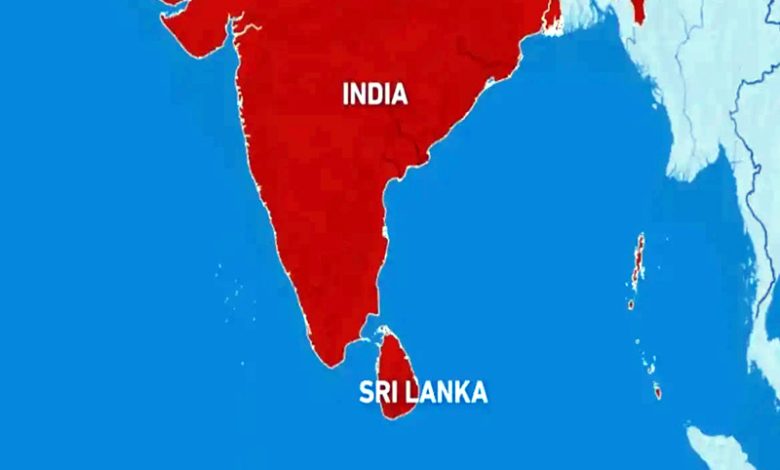
Colombo: India is awaiting Sri Lanka’s response to a proposal to prepare a detailed project report (DPR) on land connectivity between the two countries, an official said on Tuesday.
Indian High Commissioner to Sri Lanka Santosh Jha, speaking during an interactive session with journalists, said the land connectivity initiative had originally been proposed by Sri Lanka.
“Our proposal to the government of Sri Lanka to conduct a detailed project report is still on the table. We are waiting for the government of Sri Lanka to respond,” he said. “It is important to recall that the land connectivity project was actually a Sri Lankan proposal, not an Indian one.”
He added that India remains supportive of moving forward with the project.
Responding to questions about the proposed interconnection of the two countries’ power grids, Jha said that meetings had already taken place and technical aspects had been discussed. Work is now focused on developing the financial framework for implementation, though he acknowledged potential delays due to Sri Lanka’s current focus on cyclone response efforts.
“When the External Affairs Minister visited, the only issue discussed was the cyclone response,” he said. “At some point, we will revive these discussions to address the financial modalities for implementation.”
Jha emphasized that the Sri Lankan government has shown strong commitment to the project, citing clear economic benefits for the country. On the proposal to develop the grid as an energy hub, he said one meeting had already been held and both sides were exchanging views on the scope of work and implementation mechanisms.
In his opening remarks, the High Commissioner highlighted India’s extensive assistance following Cyclone Ditwah, noting that New Delhi has shifted its focus toward reconstruction and rebuilding in support of Sri Lanka’s recovery plans.
“This reflects Sri Lanka’s central place in India’s Neighbourhood First and MAHASAGAR policies,” he said, adding that India had extended a $450 million assistance package aligned with Sri Lanka’s assessed needs. The package includes $350 million in concessional Lines of Credit and $100 million in grants, aimed at supporting the sectors most affected by the cyclone.
He outlined five key areas of assistance:
- Rehabilitation and restoration of road, railway, and bridge connectivity;
- Construction of houses that were fully or partially destroyed;
- Support for damaged health and education infrastructure;
- Agricultural assistance to address short- and medium-term shortages; and
- Strengthening disaster response and preparedness mechanisms.
Jha said that in the coming week, two bridges constructed under the assistance package are expected to be inaugurated, while restoration work on the Northern Railway line will begin. Bridge construction is being funded through a grant of nearly $30 million, which is expected to cover the restoration of all bridges damaged by Cyclone Ditwah. Repairs to the Northern Railway line will also be grant-funded.
Additional priorities include the installation of nearly 200 reverse osmosis (RO) water purification plants at locations identified by the Sri Lankan government, as well as the supply of temporary shelter materials for families displaced by the cyclone.
Proposals are also being finalized for a $50 million grant to support the repair and reconstruction of partially and fully damaged houses. Jha added that work is underway to finalize modalities for several projects, including INR-denominated lines of credit, which will help rebuild roads and railways and facilitate the procurement of food, medicines, medical equipment, fertilizers, livestock, and other essential items currently in short supply.