Ceasefire Rekindles Hope as Bangladesh University Renews Mission to Educate Women from Gaza

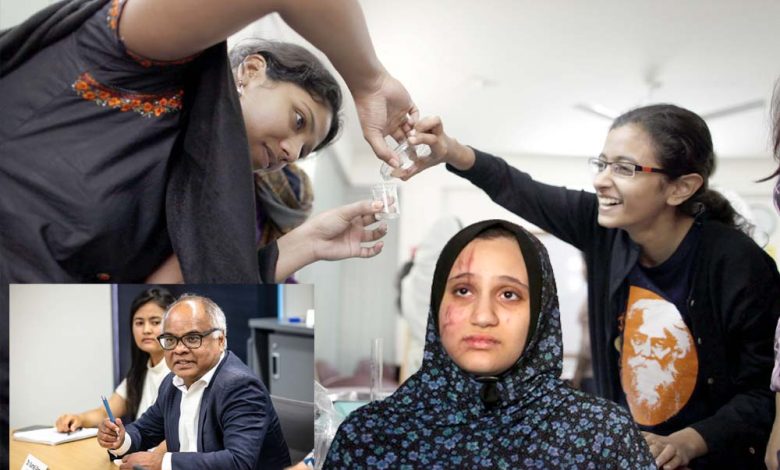
CHITTAGONG: Bangladesh, The fragile ceasefire in Gaza has revived hopes for dozens of young women whose dreams of higher education were shattered by war. The Asian University for Women (AUW) in Bangladesh has renewed its efforts to bring female students from Gaza to its Chittagong campus, after earlier evacuation attempts fell through due to the conflict.
AUW founder Kamal Ahmad said the university remains unwavering in its mission. “We will keep trying until we are able to achieve our goal,” he told This Week in Asia, emphasizing that education it had become “a casualty of war.”
Founded in 2008, AUW offers full scholarships to women from underprivileged or conflict-affected backgrounds, helping them pursue higher education that can transform their lives. The university is funded through global donations from foundations, companies, and individuals, including supporters from Hong Kong.
Moved by the devastation in Gaza since the war erupted in October 2023, AUW began reaching out online to prospective students through the websites of 17 local universities that existed before the conflict. Out of 2,000 applicants, 180 students were selected for relocation.
However, the process has been fraught with challenges—from securing passports for students who lack documentation to persuading Israeli authorities to allow safe passage. The United Arab Emirates has agreed to assist with transportation, though final arrangements have faced repeated delays.
Ahmad remains hopeful the operation will move forward soon, as geopolitical conditions ease. AUW has a proven track record of rescuing and educating women from similarly dire circumstances, including Afghanistan and the Rohingya refugee camps in Myanmar.
In 2021, amid the Taliban takeover, AUW successfully evacuated Afghan students and alumni from Kabul aboard U.S. military aircraft, following several failed attempts and a near-cancellation after a deadly airport bombing.
Ahmad, a Harvard-educated lawyer, believes that formal university education—beyond basic vocational training—unlocks the full potential of women from marginalized regions. “Our idea is to get brilliance everywhere, whether you are a literary person or a physicist,” he said, noting that AUW’s goal is to nurture future leaders.
The transformative impact of AUW’s mission is evident in stories like that of Humaira Humaira, a Rohingya student who fled Myanmar and now studies general sciences at the university. “We used to hear gunshots and couldn’t sleep properly,” the 19-year-old recalled of her time in a refugee camp. Now aspiring to become a doctor, she hopes to “help women from the Rohingya community live healthier, better lives.”
Another student, Alham Rahimi, joined AUW in 2018 and is now pursuing research on social-emotional learning after completing her master’s in education.
From its modest start in 2008 with 127 students, AUW has grown to about 2,000 students from across Asia and the Middle East. Operating from rented buildings, the university is constructing a permanent 140-acre campus on land granted by the Bangladesh government.
Looking ahead, AUW plans to expand its annual intake to 10,000 students, giving thousands more women from refugee and conflict-affected regions a chance to rebuild their lives through education.