Tejas Crash at Dubai Air Show Undercuts India’s Fighter Export Push

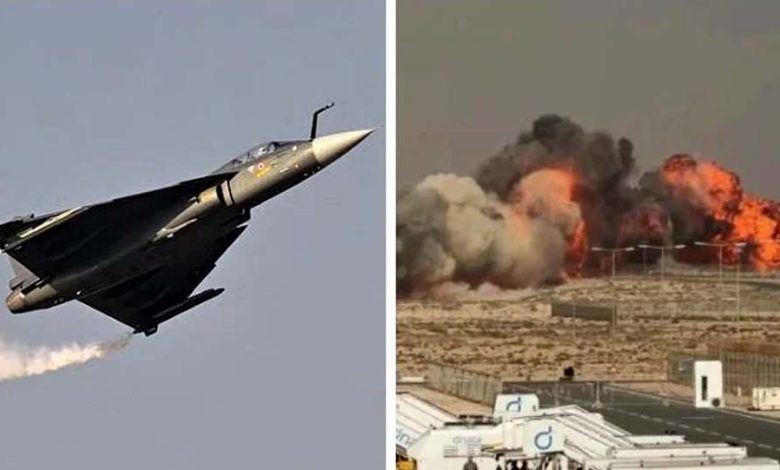
The crash of India’s Tejas fighter jet during a demonstration at the Dubai Air Show has dealt a setback to New Delhi’s ambitions to expand defence exports, coming just as rival Pakistan announced a new overseas sale of its JF-17 Thunder aircraft.
The cause of Friday’s accident, which killed Wing Commander Namansh Syal, has not yet been determined. But defence analysts say the highly public mishap is likely to overshadow India’s long-running effort to market the Tejas to foreign buyers after a development path stretching more than four decades.
“The imagery is brutal,” said Douglas A. Birkey of the Mitchell Institute for Aerospace Studies, noting that air-show crashes send the opposite signal of technological achievement. While the incident will generate negative publicity, he added, it is unlikely to derail the programme entirely.
Dubai hosts the world’s third-largest air show after Paris and Farnborough, and accidents at such events have become increasingly rare. Past crashes—including Sukhoi and MiG jets at the Paris Air Show—did not prevent subsequent sales, and experts say fighter purchases are usually driven by geopolitical considerations rather than isolated incidents.
The Tejas programme was launched in the 1980s to replace India’s ageing MiG-21s, the last of which retired only in September. State-owned Hindustan Aeronautics Ltd (HAL) has orders for 180 upgraded Mk-1A variants, but deliveries have been delayed due to engine supply issues at GE Aerospace.
A former HAL executive said the Dubai crash effectively “rules out exports for now,” despite efforts to pitch the jet to markets in Asia, Africa and Latin America. HAL opened an office in Malaysia last year as part of that campaign.
The Indian Air Force, meanwhile, is grappling with a shrinking fleet. Its fighter squadrons have dropped to 29 against an authorised strength of 42, with older MiG-29s, Jaguars and Mirage 2000s set for retirement. “The Tejas was supposed to be their replacement,” an IAF officer said, “but it is facing production issues.”
To fill immediate gaps, India is considering additional purchases of French Rafales and is reviewing competing offers for U.S. F-35s and Russia’s Su-57. India still plans to expand its Tejas fleet beyond the roughly 40 aircraft currently in service.
Analysts say the significance of the Tejas may ultimately lie more in the domestic aerospace ecosystem it supports than in export prospects. Development of the jet was hindered for years by sanctions after India’s 1998 nuclear tests and delays in indigenous engine production.
India and Pakistan were both strongly represented at this year’s Dubai event. As the Tejas performed multiple displays, Pakistan announced a provisional deal to export its JF-17 Thunder Block III, co-developed with China. The aircraft was showcased alongside Chinese missiles, including the PL-15E—an export version of the system that U.S. and Indian officials say downed at least one Indian Rafale during a major aerial clash in May.
Pakistan marketed the JF-17 as “battle-tested,” while Indian officials noted that the Tejas was not used in that conflict and did not participate in this year’s Republic Day flypast, citing safety considerations linked to single-engine aircraft.