Sri Lanka Farmers Struggle to Replant as Cyclone Ditwah Wreaks Havoc on Crops

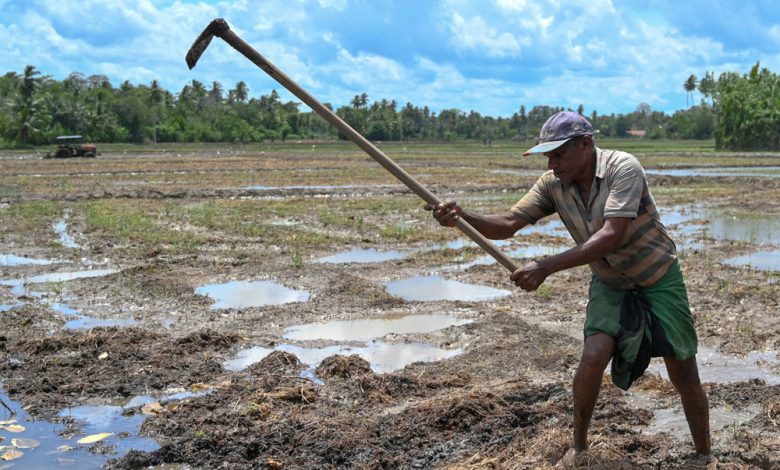
PALLEPOLA, Sri Lanka: Mud and sand have buried the rice crop on Kalanchi Dewage Risman’s two-acre (0.8-hectare) farm just as green shoots were beginning to emerge, before Cyclone Ditwah tore through Sri Lanka.
“I have to clear out the mud, level out the field, and then plant again,” said Risman, 55, who depends on rice farming to support his wife and two sons. He now faces the likelihood of sinking deeper into debt to recover. “It’s already mid-December and rice planted this late won’t provide a good harvest,” he added.
Replanting has become a daunting challenge after Cyclone Ditwah flooded crops across 535,000 hectares (1.3 million acres). Government data shows that more than 120,000 hectares (297,000 acres) have been completely washed away or buried under mud and sand.
The cyclone struck key rice-, vegetable-, and maize-growing regions farmed by nearly 1.8 million families when it swept across the island nation of 22 million people in November. The storm killed 643 people and forced more than 70,000 into relief centres.
Just two weeks earlier, nearly 800,000 farmers had cultivated 563,950 hectares (1.4 million acres) of paddy during the main growing season from November to February, according to United Nations estimates.
Flooding, prolonged waterlogging, and strong winds have also caused severe damage to about 95,799 hectares (237,000 acres) of other field crops. An additional 13,463 hectares (33,300 acres) of maize, pulses, bananas, and vegetables were affected.
Torrential rain and floods damaged 483 dams and 1,936 canals, covering rice fields in central Sri Lanka with mud, according to initial estimates from the agriculture ministry.
Rice and vegetable farming supports around 300 families in the region, and many are now pooling resources in an effort to salvage at least part of their fields, six farmers told Reuters.
More than 15 billion rupees allocated for compensation will begin to be distributed this week, Agriculture Secretary D. P. Wickramasinghe told Reuters, ruling out the need for immediate rice imports.