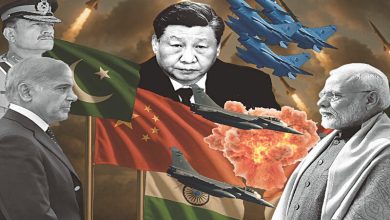
Arms Race amid Rising Waters: How Militarisation Deepens South Asia’s Climate Crisis


South Asia — particularly India and Pakistan — faces intensifying climate disasters such as heatwaves, floods, and glacial melt, yet both countries continue to prioritise military spending over climate resilience.
Despite contributing minimally to global greenhouse gas emissions (Pakistan 0.9%, India 8%), both nations suffer disproportionately from climate change impacts. Pakistan’s 2022 floods displaced 33 million people, while India’s recent Punjab floods uprooted hundreds of thousands. The rapid melting of Himalayan glaciers threatens regional water security, agriculture, and livelihoods.
However, instead of investing in adaptation and mitigation, India and Pakistan remain locked in a nuclear arms race — together spending nearly $90 billion annually on defence. Their militaries are also major, yet largely unaccounted-for, emitters of greenhouse gases. Pakistan’s military, deeply involved in the national economy, further complicates efforts to measure or limit emissions.
The article warns that this “militarisation of climate policy” — where environmental challenges are treated as security threats — empowers military institutions at the expense of civilian climate governance. For example, Pakistan’s disaster authority is led by a general, while India has used sedition laws against environmental protesters.
The region’s policy incoherence is stark: Pakistan seeks billions in climate finance while increasing its defence budget by 20%. Such spending diverts funds from sustainable development and adaptation, leaving communities more exposed to recurring disasters.
Ultimately, South Asia’s climate-security nexus is shaped by mistrust and competition, not cooperation. The continued framing of climate change through a security lens undermines collective resilience, cross-border coordination, and genuine solutions — worsening both environmental vulnerability and regional instability.